Quick Answer for Can You Drink Coffee with Gastritis? Cold Brew pH, Chicory, Matcha & Low-Acid Options: No, you should not drink regular or decaf coffee during an active gastritis flare. Coffee contains caffeine, chlorogenic acids, and catechols that stimulate gastrin release, lower esophageal sphincter pressure, and increase stomach acid production (pH < 2.0), directly irritating damaged gastric mucosa. Roasted chicory root is the safest alternative.
For the estimated 60 million Americans managing chronic gastritis, gastroesophageal reflux disease (GERD), or peptic ulcer disease, the morning cup of coffee represents a daily clinical dilemma. Patients frequently report that eliminating coffee brings rapid relief from epigastric burning, early satiety, and postprandial nausea, yet the neurological withdrawal and loss of morning ritual push them to search for workarounds: switching to cold brew, buying "low-acid" beans, or transitioning to decaf.
When those modifications still result in a mid-morning flare, frustration sets in. Without an objective framework to evaluate how specific chemical compounds interact with an inflamed stomach lining, dietary management begins to feel arbitrary.
In clinical practice, evaluating whether a beverage is compatible with gastritis requires looking beyond the pH strip test of the liquid inside the mug. You must examine how the beverage alters the physiology of the stomach once swallowed. Specifically, how does it affect the protective gastric mucus-bicarbonate barrier, parietal cell proton pumps, pepsin activation thresholds, and gastric emptying kinetics?
This clinical guide breaks down the exact biochemical mechanisms that make coffee problematic for sensitive digestion, evaluates the reality of decaf and cold brew modifications, and provides a structured protocol using the Gastric Safety Index (GSI) to help you select safe alternatives or test your tolerance systematically.
Why Coffee Irritates the Stomach: It Is Not Just the pH
A widespread misconception in nutrition forums is that coffee irritates the stomach primarily because it is an "acidic liquid." While standard black drip coffee has a pH between 4.85 and 5.10, resting human gastric juice has a baseline pH between 1.5 and 3.5. Pouring a pH 5.0 liquid into a pH 2.0 environment actually dilutes the concentration of free hydrogen ions ($H^+$) in the gastric lumen temporarily.
Coffee does not burn the stomach because of its intrinsic pH. Rather, coffee irritates compromised gastric tissue because it acts as a potent gastric secretagogue—a substance that chemically instructs the stomach to manufacture and secrete massive quantities of its own hydrochloric acid ($HCl$) and digestive enzymes, while simultaneously weakening physical anatomical barriers.
1. Chlorogenic Acids and the Gastrin Cascade
Raw and roasted coffee beans contain high concentrations of phenolic compounds known as chlorogenic acids (CGAs), primarily 5-caffeoylquinic acid (5-CQA). When chlorogenic acids reach the antrum of the stomach, they stimulate specialized neuroendocrine cells called G-cells to release the hormone gastrin into the bloodstream.
Gastrin travels to the oxyntic glands of the stomach body, where it binds to cholecystokinin-2 (CCK2) receptors on enterochromaffin-like (ECL) cells. This triggers the release of histamine, which acts in a paracrine fashion on adjacent parietal cells, activating cyclic AMP (cAMP) pathways and translocating $H^+/K^+$ ATPase proton pumps to the cell membrane. The result is a rapid, sustained outpouring of hydrochloric acid into the gastric lumen.
2. Caffeine and Intracellular Calcium Signaling
Caffeine (1,3,7-trimethylxanthine) amplifies this acid-secretion cascade through a separate, synergistic mechanism. Caffeine is a non-selective phosphodiesterase (PDE) inhibitor. Inside the parietal cell, phosphodiesterase enzymes normally break down cAMP to turn off the acid-pumping signal. By inhibiting PDE, caffeine prevents the deactivation of the proton pumps, locking the parietal cell into an active secretory state long after the beverage has emptied into the duodenum.
Furthermore, caffeine activates bitter taste receptors (TAS2Rs)—specifically TAS2R43 and TAS2R10—which are expressed not only on the tongue, but directly on parietal and enteroendocrine cells lining the human gastrointestinal tract. Activation of gastric TAS2Rs triggers an intracellular calcium ($Ca^{2+}$) flux that directly drives proton transport into the stomach cavity.
3. Pepsin Activation Thresholds and Mucosal Proteolysis
In a healthy stomach, the epithelium is shielded from this acid surge by a two-tiered defensive system: an unstirred gel layer of mucin glycoproteins (primarily MUC5AC and MUC6) infused with bicarbonate ions ($HCO_3^-$). This mucus-bicarbonate barrier maintains a neutral pH of 7.0 directly against the epithelial cell surfaces, even when the lumen pH drops below 2.0.
In a patient with acute or chronic gastritis—whether triggered by Helicobacter pylori colonization, non-steroidal anti-inflammatory drugs (NSAIDs), bile reflux, or severe physiological stress—synthesis of protective prostaglandins ($PGE_2$ and $PGI_2$) is impaired. The mucus layer becomes thin, patchy, and depleted of bicarbonate.
When coffee triggers a surge of hydrochloric acid, the intragastric pH plunges below 2.0. At this threshold, inactive pepsinogen secreted by gastric chief cells is rapidly cleaved into active pepsin. Pepsin is an aggressive proteolytic enzyme designed to digest dietary amino acid bonds. When the mucosal barrier is compromised, pepsin diffuses backward through the thinned mucus gel and begins digesting the structural proteins of your own stomach wall, causing the sharp, gnawing epigastric pain characteristic of a gastritis flare.
4. Lower Esophageal Sphincter (LES) Relaxation
For the millions of patients who experience overlapping gastritis and GERD, coffee presents a mechanical problem. Caffeine and coffee lipids trigger Transient Lower Esophageal Sphincter Relaxations (TLESRs). By modulating nitric oxide (NO) pathways in the myenteric plexus, coffee reduces the resting basal pressure of the smooth muscle ring separating the esophagus from the stomach.
As the stomach fills with newly secreted acid and pepsin, the relaxed sphincter permits retrograde reflux of gastric contents into the unprotected squamous epithelium of the esophagus, where pepsin remains proteolytic up to a pH of 4.0 and remains structurally stable (waiting to be reactivated by any subsequent acidic drink) up to pH 6.5.
5. The Fasting Morning Trap
Drinking coffee first thing in the morning on an empty stomach maximizes every one of these pathological mechanisms. After an overnight fast, the stomach contains zero food proteins to buffer incoming hydrogen ions or give pepsin a dietary substrate to act upon. The concentrated liquid makes immediate, unbuffered contact with the antral and fundic mucosa, accelerating gastric contractility and triggering a rapid inflammatory response.
The Decaf and Cold Brew Reality Check
When gastroenterologists advise patients to stop drinking coffee during mucosal healing, patients routinely ask about three popular modifications: decaffeinated coffee, cold brew, and dark-roast "stomach-friendly" beans. Here is what clinical biochemistry reveals about each option.
Why Decaf Still Triggers Gastritis Flares
Switching to decaffeinated coffee removes at least 97% of the caffeine content (reducing a standard 8-ounce cup from roughly 95 mg of caffeine to 2–5 mg). While this eliminates the phosphodiesterase inhibition and significantly reduces the frequency of Lower Esophageal Sphincter relaxations, decaf coffee remains a potent stimulant of gastric acid secretion.
Clinical studies utilizing intragastric pH-metry and serum radioimmunoassays demonstrate that decaffeinated coffee stimulates gastrin release at levels up to 70% to 80% as high as regular caffeinated coffee. Why? Because the decaffeination process—whether performed via methylene chloride, ethyl acetate, or the Swiss Water Process—specifically targets the caffeine molecule while leaving chlorogenic acids, caffeic acid, and roasting-derived catechols largely intact.
Furthermore, many commercial decaf coffees are produced using Coffea canephora (Robusta) beans rather than Coffea arabica. Robusta beans naturally contain significantly higher concentrations of chlorogenic acids than Arabica beans. Consequently, a patient drinking a dark cup of commercial decaf on an empty stomach still initiates the G-cell gastrin cascade, driving intragastric pH down and activating pepsin. Within the Gastric Safety Index (GSI) framework, black decaf coffee scores a 38 (High Risk)—an improvement over regular black coffee (GSI 18), but still unsafe during active mucosal inflammation.
The Cold Brew pH Illusion vs. Titratable Acidity
Cold brew is produced by steeping coarse coffee grounds in room-temperature or chilled water for 12 to 24 hours, bypassing the thermal extraction of hot water (typically 90°C–96°C / 195°F–205°F). Proponents claim that cold brew is up to 67% less acidic than hot coffee.
To evaluate this claim clinically, we must distinguish between pH (the logarithmic measure of free hydrogen ions currently in solution) and titratable acidity (the total concentration of all acid molecules present, both free and bound, that can donate protons during digestion).
- pH Comparison: Standard hot drip coffee typically measures between pH 4.85 and 5.10. Cold brew made from the exact same bean typically measures between pH 5.10 and 5.40. While the logarithmic scale means a shift from 4.9 to 5.3 represents a noticeable drop in free $H^+$ ions, both beverages remain mildly acidic and sit well above the stomach's baseline pH.
- Titratable Acidity: Because certain organic acids (such as quinic, citric, and malic acids) require high thermal energy to extract fully from the cellulose matrix of the coffee bean, cold water extraction does yield a liquid with roughly 15% to 25% lower total titratable acidity.
However, cold brew introduces a major clinical pitfall: concentration. Cold brew is almost universally steeped at higher coffee-to-water ratios (often 1:4 to 1:8 by weight, compared to 1:15 or 1:17 for hot drip). Even when diluted with water or ice prior to serving, a standard 12-ounce café cold brew frequently packs 150 mg to 240 mg of caffeine, alongside a massive payload of water-soluble chlorogenic acids. The sheer pharmacological load of caffeine and secretagogues overrides the minor advantage of a 0.3-unit pH shift.
Dark Roast vs. Light Roast: The N-Methylpyridinium (NMP) Factor
Counterintuitively, dark roast coffee is chemically gentler on the stomach lining than light roast ("blonde" or "city" roast) coffee. Many patients assume dark espresso beans are "stronger" and therefore more harsh, leading them to purchase light roasts that actually worsen their symptoms.
During prolonged, high-temperature roasting, two critical chemical transformations occur inside the coffee bean:
- Thermal Degradation of Chlorogenic Acids: Extended roasting breaks down up to 60%–70% of the bean's chlorogenic acid content, converting and volatilizing the primary compounds that trigger G-cell gastrin release.
- Formation of N-Methylpyridinium (NMP): As trigonelline (an alkaloid naturally present in green coffee beans) undergoes pyrolysis at temperatures above 200°C, it transforms into N-methylpyridinium (NMP).
Pioneering biochemical research by Somoza, Rubach, and colleagues demonstrated that NMP acts as a physiological antagonist to coffee's secretagogues. Specifically, NMP downregulates the expression of proton transport proteins on human gastric parietal cells, actively blunting the hydrochloric acid surge normally triggered by caffeine and catechols. Light roast beans are pulled from the roaster before significant trigonelline pyrolysis occurs, resulting in a beverage with maximum chlorogenic acid and minimal protective NMP.
Coffee Cutters, Buffering Powders, and Dairy/Plant Milks
What happens when you add buffers or milk to coffee?
- Mineral Acid Reducers: Commercial drops and powders added to coffee typically contain calcium carbonate, potassium bicarbonate, or magnesium hydroxide. These alkaline salts neutralize free organic acids in the cup, raising the beverage pH to 6.0–6.8. While this protects the sensitive tissues of the oropharynx and esophagus from direct acid contact during swallowing, it does not neutralize caffeine or N-methylpyridinium pathways once the liquid reaches the stomach.
- Dairy Milk vs. Plant Milks: Adding whole cow's milk buffers the pH of coffee effectively via casein and whey proteins. However, dairy fat triggers enteroendocrine I-cells in the duodenum to release cholecystokinin (CCK). CCK slows gastric emptying—keeping the coffee-and-acid mixture pooled in the stomach longer—and further relaxes the Lower Esophageal Sphincter. Furthermore, calcium and hydrolyzed casein peptides in dairy are independent stimulants of gastrin release (the "milk-alkali rebound" effect).
- Oat and Almond Milk: Unsweetened, low-oil oat milk or simple almond milk (made purely from almonds and water, free of carrageenan, gellan gum, or high-oleic sunflower oil) provides an optimal middle ground. Plant proteins bind a portion of coffee's astringent polyphenols and tannins, while the neutral pH (6.5–7.0) buffers free hydrogen ions without triggering a heavy CCK lipid delay. Moreover, oat milk contains soluble beta-glucan fibers that form a mild colloidal suspension, offering subtle physical cushioning to the gastric mucosa.
Science-Backed Alternatives Analyzed by the Gastric Safety Index (GSI)
When patients attempt to manage gastritis through simple food journaling, they frequently hit a wall. Because gastric emptying rates, residual pepsin activity, and mucosal inflammation compound over 24 to 48 hours, a plain notebook makes it seem as though everything is a trigger.
At Gutrack, we built the Gastric Safety Index (GSI) to replace guesswork with objective physiological scoring. The GSI evaluates foods and beverages on a 0 to 100 scale across six weighted biochemical vectors: titratable acidity/pH, secretagogue load (gastrin/histamine stimulation), lipid transit delay (CCK signaling), mechanical/osmolar mucosal friction, proteolytic pepsin interaction, and soluble mucosal protection.
- Safe Zone (GSI 70–100): Gentle on compromised mucosa, supports steady gastric emptying, preserves the mucus-bicarbonate barrier.
- Caution Zone (GSI 40–69): Contains moderate irritants, secretagogues, or transit-delaying lipids. Tolerable in small volumes with food during stable recovery phases, but risky during flares.
- High Risk Zone (GSI 0–39): Potent acid secretagogues, direct mucosal irritants, or LES relaxants. Consistently triggers symptoms in compromised stomachs.
Here is how evidence-based morning alternatives perform under clinical scrutiny.
1. Roasted Chicory Root (Cichorium intybus) — GSI: 88 (Safe)
Roasted chicory root is the gold-standard clinical substitute for coffee during gastritis recovery. When the taproot of the chicory plant is dried, chopped, and dark-roasted, its natural carbohydrates undergo non-enzymatic Maillard browning and caramelization. This produces an aromatic profile and rich, dark, slightly bitter visual extraction that closely mimics dark-roast drip coffee or New Orleans-style espresso.
Biochemical Profile:
- Zero Caffeine & Zero Chlorogenic Secretagogues: Chicory does not stimulate G-cell gastrin release, does not inhibit parietal cell phosphodiesterase, and does not lower basal LES pressure.
- Sesquiterpene Lactones (Lactucin and Lactucopicrin): These compounds provide the pleasant bitterness coffee drinkers crave, but unlike caffeine, they exhibit documented anti-inflammatory properties by inhibiting cyclooxygenase-2 (COX-2) and nuclear factor kappa B (NF-$\kappa$B) signaling pathways in gastrointestinal tissue.
- Inulin Prebiotic Fiber: Chicory root is rich in water-soluble inulin. Clinical caveat: While inulin is completely non-irritating to the squamous epithelium of the esophagus and the columnar mucosa of the stomach, it is a fructan (an oligosaccharide in the FODMAP family). If you have concurrent irritable bowel syndrome (IBS) or small intestinal bacterial overgrowth (SIBO), start with a weak 4-ounce infusion of chicory to ensure colonic fermentation does not cause lower-abdominal gas.
2. Roasted Dandelion Root (Taraxacum officinale) — GSI: 90 (Safe)
Often blended with roasted barley, rye, or chicory (or brewed solo from 100% pure roasted root), dandelion root produces a warm, medium-bodied dark infusion with cocoa and toasted wood notes.
Biochemical Profile:
- Mucosal Cytoprotection: Dandelion root contains taraxasterol and specific polysaccharides that have demonstrated gastroprotective effects in mucosal injury models by preserving endogenous prostaglandin $E_2$ ($PGE_2$) levels and supporting mucin secretion.
- Prokinetic Support: Mild bitter compounds in dandelion root gently stimulate vagal cephalic-phase digestion and bile flow without triggering pathological hyperchlorhydria (excess stomach acid). This helps prevent the stagnant gastric pooling and postprandial fullness common in patients on long-term Proton Pump Inhibitors (PPIs).
- Clinical caveat: If opting for commercial blends like Dandy Blend, verify whether you require a gluten-free formulation, as many traditional European roasted grain beverages utilize roasted barley and rye extracts.
3. Ceremonial Matcha & Green Tea (Camellia sinensis) — GSI: 54–66 (Caution)
Many patients abandon coffee for green tea or matcha lattes assuming tea is universally gentle. In reality, Camellia sinensis requires careful dosing and timing.
Biochemical Profile:
- The L-Theanine Buffer: A standard 1-gram serving of ceremonial-grade matcha contains roughly 30 mg to 35 mg of caffeine—about one-third the load of drip coffee. Crucially, matcha is rich in the amino acid L-theanine. L-theanine crosses the blood-brain barrier to promote alpha-wave activity and blocks caffeine from binding to adenosine receptors as aggressively, preventing the sympathetic nervous system spike (cortisol and adrenaline release) that constricts splanchnic blood flow to the stomach wall.
- Epigallocatechin Gallate (EGCG) and Tannins: Matcha is concentrated with catechins, particularly EGCG. In low doses with food, EGCG acts as an antioxidant that suppresses H. pylori urease activity and downregulates gastric mucosal inflammation. However, on an empty stomach, concentrated tea tannins bind directly to mucin proteins in the gastric lining, precipitating them and causing acute astringency, vagal nausea, and epigastric cramping.
- Preparation Rule: Never drink matcha or green tea fasting. Consume 1 gram of ceremonial matcha whisked into warm water and 6 ounces of unsweetened oat milk 15 to 20 minutes after a mucilage-rich breakfast (such as rolled oatmeal). This elevates the beverage's functional GSI to 64 (Upper Caution) by giving the tannins dietary proteins and beta-glucans to bind with instead of your stomach lining.
4. Functional Mushroom Brews (Lion's Mane, Chaga, Reishi) — GSI: 35–82 (Variable)
The market for "mushroom coffee" has exploded, but clinical labels are frequently misleading. You must categorize mushroom beverages into two distinct groups:
- Hybrid Mushroom Coffees (GSI: 35 – High Risk): Most popular commercial brands combine 50% instant Arabica or Robusta coffee with 50% mushroom extract powder. These still contain 45 mg to 60 mg of caffeine plus full payloads of dehydrated chlorogenic acids. They will trigger gastritis flares just like regular coffee.
- 100% Pure Fruiting-Body Mushroom Elixirs (GSI: 82 – Safe): Pure hot water extracts of Lion's Mane (Hericium erinaceus) and Chaga (Inonotus obliquus) containing zero coffee beans are exceptionally supportive for gastric recovery. Lion's Mane contains unique fungal beta-glucan polysaccharides and hericenones that have been shown in histological studies to enhance gastric mucus barrier thickness, stimulate epithelial cell proliferation during ulcer healing, and inhibit H. pylori adhesion. Chaga is naturally alkaline-forming and rich in melanin complexes that scavenge free radicals in inflamed tissue.
5. Golden Turmeric Oat Latte & Herbal Infusions — GSI: 86–95 (Safe)
For patients in an acute erosive flare (characterized by daily burning, night waking, or pain immediately upon eating), zero-caffeine herbal infusions and demulcent lattes are mandatory.
- Chamomile Infusion (Matricaria recutita) — GSI: 94: Contains apigenin and alpha-bisabolol, flavonoids and sesquiterpenes that relax spasmodic gastric smooth muscle, inhibit pepsin proteolytic activity slightly at the mucosal border, and accelerate ulcer re-epithelialization.
- Golden Turmeric & Ginger Oat Latte — GSI: 86: Warm unsweetened oat milk whisked with a quarter-teaspoon of ground turmeric and a pinch of ginger root powder (skip the black pepper/piperine, which activates TRPV1 pain receptors in raw gastric mucosa). Gingerols and shogaols act as serotonin $5-HT_3$ receptor antagonists and gentle prokinetics, accelerating antral contractions so stomach contents empty smoothly into the duodenum without refluxing.
GSI Scoring Matrix: Morning Beverages Compared
When reviewing your diet with a gastroenterologist or using the Gutrack iOS app to scan your morning routine, comparing beverages side-by-side clarifies why subtle preparation changes dictate whether your morning ends in comfort or epigastric pain.
| Morning Beverage (8 oz Serving) | GSI Score (0–100) | Clinical Zone | Approx. pH & Caffeine | Primary Physiological Mechanism in the Stomach |
|---|---|---|---|---|
| Light Roast Black Drip Coffee (Fasting) | 14 / 100 | High Risk | pH 4.85 | 110 mg | Maximum chlorogenic acid load + low NMP; stimulates G-cell gastrin cascade, drives lumen pH < 2.0, activates pepsin, and relaxes LES basal pressure. |
| Standard Espresso / Americano (Black) | 18 / 100 | High Risk | pH 4.95 | 95 mg | Concentrated caffeine inhibits parietal cell PDE; TAS2R bitter receptor activation drives acute proton pump translocation and mucosal irritation. |
| Whole Dairy Milk Latte (2 Shots) | 28 / 100 | High Risk | pH 6.10 | 130 mg | Dairy protein buffers initial pH, but milk lipids trigger duodenal CCK release—slowing gastric emptying and pooling acid—while calcium triggers rebound gastrin. |
| Decaf Drip Coffee (Black, Fasting) | 38 / 100 | High Risk | pH 5.00 | 3 mg | Removes caffeine PDE inhibition, but retains chlorogenic acids and catechols that stimulate 70–80% of regular coffee's gastrin and HCl surge. |
| Commercial Cold Brew (Black, Diluted) | 42 / 100 | Caution | pH 5.25 | 165 mg | 15–20% lower titratable acidity than hot brew, but high caffeine concentration still triggers TLESRs (reflux) and parietal cell acid secretion. |
| Dark Roast Cold Brew + Oat Milk (Post-Meal) | 58 / 100 | Caution | pH 6.20 | 65 mg | High NMP from dark roasting blunts proton pump upregulation; oat beta-glucans and proteins bind polyphenols; food substrate buffers pepsin. |
| Ceremonial Matcha Oat Latte (Post-Meal) | 64 / 100 | Caution | pH 6.40 | 32 mg | L-theanine blunts sympathetic vasoconstriction; oat proteins bind astringent EGCG tannins, preventing direct mucosal precipitation. |
| 100% Pure Lion's Mane & Chaga Elixir | 82 / 100 | Safe | pH 6.50 | 0 mg | Zero coffee bean secretagogues; fungal beta-glucans support MUC5AC mucin layer integrity and promote epithelial tissue repair. |
| Golden Turmeric & Ginger Oat Latte (No Pepper) | 86 / 100 | Safe | pH 6.45 | 0 mg | Colloidal oat beta-glucan coats mucosa; gingerols provide gentle prokinetic gastric emptying without stimulating parietal acid output. |
| Roasted Chicory Root Brew (Black or w/ Oat Milk) | 88 / 100 | Safe | pH 5.90 | 0 mg | Delivers dark roasted Maillard flavor with zero caffeine or chlorogenic acid; sesquiterpene lactones downregulate mucosal COX-2 inflammation. |
| Roasted Dandelion Root Infusion | 90 / 100 | Safe | pH 6.10 | 0 mg | Preserves endogenous mucosal prostaglandin E2 ($PGE_2$) synthesis and gently supports cephalic-phase motility without acid hypersecretion. |
| Warm Chamomile Flower Infusion | 94 / 100 | Safe | pH 6.60 | 0 mg | Apigenin and alpha-bisabolol exert antispasmodic effects on gastric smooth muscle and protect compromised epithelium from pepsin proteolysis. |
Medical Realities: PPIs, H. pylori, and Endoscopic Healing
To understand why your tolerance to coffee fluctuates wildly from month to month, it is helpful to look at what is happening histologically inside your stomach during medical treatment.
Endoscopic Findings vs. Microscopic Histology
Patients are frequently confused when a gastroenterologist performs an upper endoscopy (EGD), reports that the stomach looks "mostly normal" or shows only "mild erythematous gastropathy," yet a sip of coffee triggers severe pain.
Visual inspection during an endoscopy detects macroscopic changes: large erosions, frank ulcerations, or severe hemorrhage. However, when the pathologist examines the mucosal biopsy under a microscope, they frequently identify chronic active inflammation (infiltration of lymphocytes, plasma cells, and neutrophils into the lamina propria) alongside dilated intercellular spaces (DIS).
When tight junctions between gastric epithelial cells are widened by chronic low-grade inflammation, microscopic hydrogen ions and caffeine molecules penetrate directly through the paracellular gaps to reach transient receptor potential vanilloid 1 (TRPV1) nociceptive nerve fibers in the submucosa. You experience intense burning pain even in the absence of a visible bleeding ulcer because the barrier's tight junctions have not yet sealed.
The PPI Rebound Trap (Hypergastrinemia)
If you are taking a Proton Pump Inhibitor (such as omeprazole, pantoprazole, or esomeprazole) or a Potassium-Competitive Acid Blocker (vonoprazan), your intragastric pH is pharmacologically held above 4.0 for much of the day. Many patients discover that while on 40 mg of a PPI, they can drink coffee without immediate burning. This is a dangerous clinical illusion.
- Unopposed Pepsin and Bile: Even when a PPI blocks acid secretion, coffee still triggers LES relaxations and alters gastric motility, allowing weakly acidic refluxate containing inactive pepsin and duodenal bile salts to wash over the gastric and esophageal lining.
- Trophic ECL Cell Hyperplasia & Rebound: When a PPI suppresses stomach acid for weeks, the antral G-cells sense the high pH and continuously pump out massive quantities of gastrin in an attempt to turn acid back on—a state called secondary hypergastrinemia. This elevated gastrin causes the histamine-producing ECL cells in your stomach to multiply (hyperplasia).
When you eventually taper off your PPI, those enlarged ECL cells possess an amplified capacity to release histamine. If you drink chlorogenic-acid-rich coffee during or shortly after a PPI taper, you hit those sensitized ECL cells with a massive gastrin stimulus, triggering severe Rebound Acid Hypersecretion (RAHS) that can undo months of mucosal healing in a matter of days.
Post-H. pylori Triple or Quadruple Therapy
If your gastritis was caused by Helicobacter pylori and you recently completed a 14-day course of triple or bismuth quadruple antibiotic therapy, eradication of the bacteria is only step one. H. pylori uses urease enzymes and cytotoxin-associated gene A (CagA) proteins to destroy the foveolar mucus-secreting cells of the stomach.
Even after a negative stool antigen or urea breath test confirms the infection is gone, complete structural regeneration of the gastric mucosal architecture and normalization of parietal cell signaling takes 6 to 12 weeks. Introducing coffee immediately after finishing antibiotics is one of the primary reasons patients develop chronic post-infectious functional dyspepsia.
How to Test Tolerance Safely: The Single-Variable Protocol
If you have completed your acute healing phase—meaning you have been completely free of epigastric burning, acid regurgitation, early satiety, and nausea for at least 14 consecutive days—you may wish to test whether your mucosa can tolerate a modified coffee routine.
The biggest mistake patients make during reintroduction is changing multiple variables at once: grabbing a commercial oat milk latte alongside a bakery pastry on a stressful workday morning. When symptoms flare at 1:00 PM, it is impossible to know whether the culprit was the caffeine, the high-oleic seed oils in the barista oat milk, the lipid load of the pastry, or visceral hypersensitivity from stress.
Why Unscored Food Logs Fail
Traditional pen-and-paper diaries or basic calorie trackers fail gastritis patients because they record names of foods rather than cumulative physiological loads. If you eat a dinner with a GSI of 45 (Caution) at 8:00 PM, residual pepsin and delayed gastric emptying carry over into the next morning. A drink that might be tolerable on a rested stomach will trigger a flare on a primed stomach.
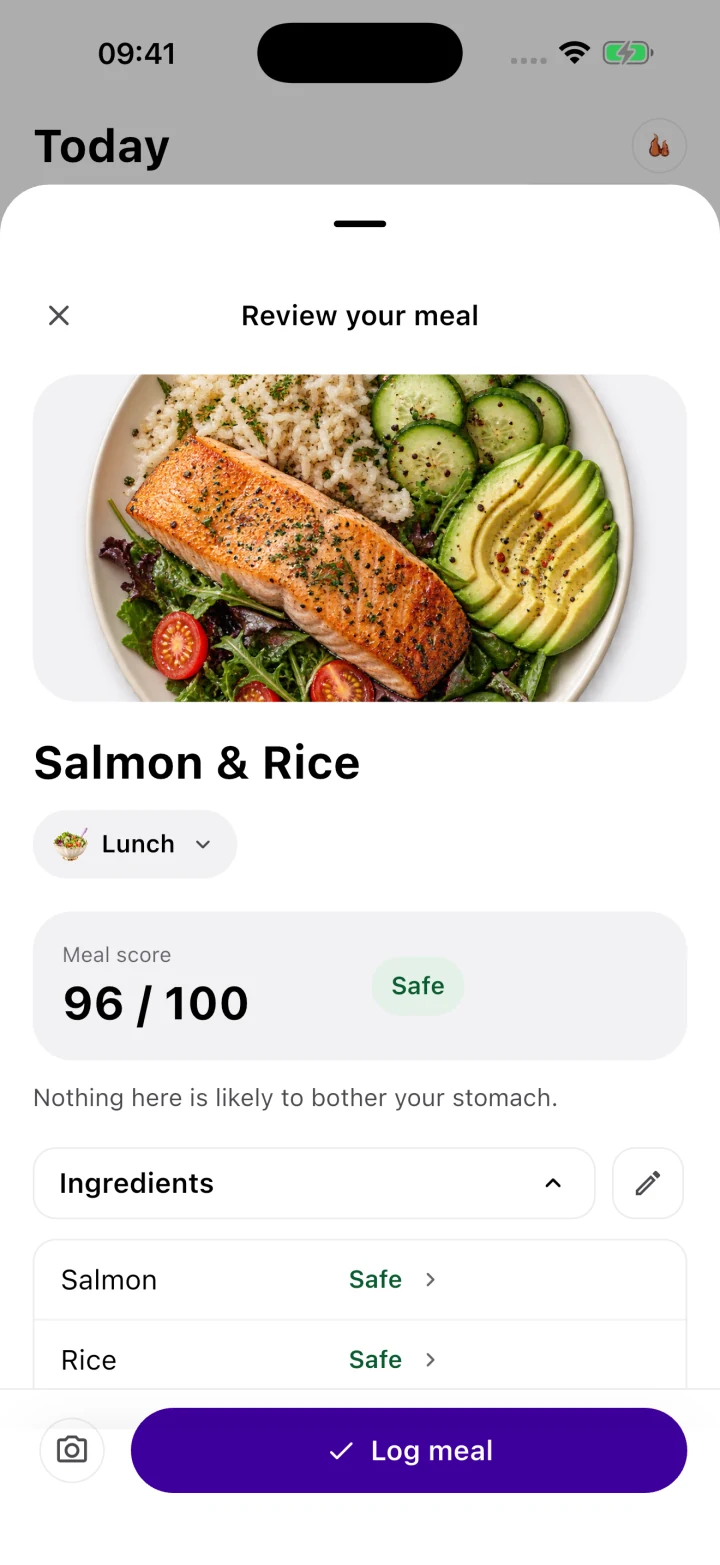
By logging your meals inside the Gutrack iOS app, every meal is automatically evaluated for its 0–100 Gastric Safety Index score. You can verify that your baseline diet is consistently averaging GSI 80+ before introducing a single-variable test, and if a flare occurs, you can export a clean, 14-day clinical PDF report showing exact meal GSI scores vs. symptom timestamps for your gastroenterologist.
The 5-Step Coffee Reintroduction Protocol
Follow this strict clinical protocol when testing coffee tolerance for the first time:
Step 1: Establish a 14-Day "Safe Zone" Baseline
Ensure your daily symptom score in Gutrack is zero (or stable baseline) for 14 days while consuming a diet where every meal scores 70 or higher on the GSI. During this phase, use roasted chicory root (GSI 88) or chamomile (GSI 94) as your morning beverage.
Step 2: Build the Mucosal Cushion First (T-Minus 20 Minutes)
Never test coffee on an empty stomach. Twenty minutes before your test beverage, consume a high-GSI, mucilage-rich breakfast that physically coats the gastric antrum and provides protein/carbohydrate substrates to buffer incoming acid.
- Ideal Pre-Coffee Meal: 1 bowl of warm rolled oatmeal cooked with water or almond milk, topped with 1 tablespoon of ground flaxseed or chia gel and sliced ripe banana (Meal GSI: 91). The soluble beta-glucans and plant mucilage form a protective hydrocolloid layer over the gastric epithelium.
Step 3: Formulate the Highest-GSI Coffee Modification
Do not start with a 12-ounce hot drip coffee. Prepare a low-secretagogue, buffered formulation:
- Bean Selection: Choose a 100% Arabica, dark-roast bean (maximizing N-methylpyridinium and minimizing chlorogenic acids). Optionally, start with a Swiss Water Process Decaf dark roast to test your reaction to chlorogenic acids before testing caffeine's effect on your LES.
- Extraction Method: Cold-steep coarse grounds at a 1:8 ratio in the refrigerator for 16 hours, then filter through a paper filter (paper filters trap cafestol and kahweol, diterpene lipids present in coffee oils that can irritate the GI tract and delay transit).
- Dilution & Buffering: Mix 2 ounces of the cold brew concentrate with 4 ounces of warm water and 3 ounces of simple,
Self-tracking tool, not clinical diagnosis
Gutrack provides evidence-based Gastric Safety Index estimates for daily self-management and diet optimization. It does not replace medical consultation, endoscopy, or treatment prescribed by a qualified gastroenterologist.
Frequently asked questions
Does decaf coffee still irritate gastritis and acid reflux?
Yes. While decaffeination removes 97% of caffeine, decaf coffee retains chlorogenic acids and roasting-derived catechols that stimulate enterochromaffin-like (ECL) cells to release histamine and gastrin. Clinical measurements show decaf still lowers intragastric pH below 3.0 and scores a 38 (High Risk) on the Gastric Safety Index when consumed black.
Is cold brew coffee really less acidic than hot coffee?
Cold brew has a slightly higher pH (approximately 5.10 to 5.40) compared to hot drip coffee (pH 4.85 to 5.10), and roughly 15–20% lower titratable acidity. However, because it is frequently brewed at higher concentrations, its caffeine and chlorogenic acid load still triggers parietal cell proton pumps, resulting in a Caution-zone GSI score of 42.
What is the best coffee substitute for gastritis?
Roasted chicory root is the highest-performing coffee alternative for gastritis, earning a Gastric Safety Index (GSI) score of 88 (Safe). It contains zero caffeine, no chlorogenic acid secretagogues, and provides prebiotic inulin while delivering a roasted, bitter flavor profile similar to dark-roast espresso.
Can adding almond or oat milk make coffee safe for your stomach?
Adding low-fat oat or almond milk buffers free hydrogen ions and raises the beverage pH toward 6.0, binding a portion of bitter polyphenols via plant proteins. This elevates the beverage's GSI score from 18 (Black Coffee) to 52 (Caution Zone), making it tolerable during stable maintenance phases but still too irritating for acute erosive gastritis.
Clinical Evidence & Scientific References
- Boekema PJ, et al. Effect of coffee on gastroesophageal reflux in healthy volunteers and patients with reflux esophagitis. Scand J Gastroenterol. 1999;34(sup230):35-39.
- Rao NY, Fuller M. Acidity and Antioxidant Activity of Cold Brew Coffee. Scientific Reports. 2018;8:16030.
- Rubach M, et al. A dark brown roast coffee blend is less effective at stimulating gastric acid secretion in healthy volunteers. Mol Nutr Food Res. 2014;58(6):1370-1373.
This article is for educational purposes only and isn't a substitute for professional medical advice, diagnosis, or treatment. Gutrack is a self-tracking tool, not a medical device. If you're experiencing persistent or concerning symptoms, talk to a doctor.