Quick Answer for How to Stop PPIs Without Acid Rebound: To stop PPIs without acid rebound, execute a 6-week step-down taper rather than stopping abruptly. Reduce your daily PPI dose by 50% for two weeks, alternate days bridged with an H2-blocker like famotidine (20 mg) for four weeks, and strictly consume meals scoring 80+ on the Gastric Safety Index to buffer excess acid.
The clinical scenario is remarkably consistent across gastroenterology practices. A patient is prescribed a proton pump inhibitor (PPI)—such as omeprazole, pantoprazole, esomeprazole, or lansoprazole—for an acute indication: an H. pylori eradication triple therapy protocol, a confirmed peptic ulcer, or an eight-week course for erosive esophagitis or acute gastritis. Six months or two years later, the original mucosal injury has healed, confirmed either by follow-up esophagogastroduodenoscopy (EGD) or complete symptom resolution. Wanting to avoid the long-term sequelae of chronic acid suppression, the patient decides to stop taking their morning capsule.
For the first 48 hours, nothing happens. The patient feels normal and assumes the transition is complete. Then, between Day 3 and Day 5, a violent, unremitting epigastric and retrosternal burning erupts. Sour fluid regurgitates into the throat, meals trigger immediate epigastric fullness, and nighttime acid breakthrough disrupts sleep. Convinced that their underlying GERD or gastritis has returned in a more aggressive form—or that their stomach is "genetically broken" and permanently requires medication—the patient immediately resumes the PPI. Within three days, the burning vanishes, cementing a cycle of biochemical dependence that can last for decades.
What this patient experienced was not the return of their original disease. They experienced Rebound Acid Hypersecretion (RAHS)—a predictable, drug-induced physiological surge in gastric acid output that frequently exceeds the patient’s pre-treatment baseline.
Stopping a PPI after more than eight weeks of continuous therapy requires more than willpower; it requires managing an altered endocrine feedback loop while protecting a vulnerable gastric and esophageal lining. By combining a structured, six-week pharmacological step-down schedule with precise dietary buffering measured by the Gastric Safety Index (GSI), you can normalize your stomach's acid-producing machinery without triggering mucosal injury.
The Physiology of Rebound Acid Hypersecretion (RAHS)
To understand why stopping a PPI causes severe burning, it is necessary to examine how gastric acid is regulated at the cellular level and how proton pump inhibitors disrupt that equilibrium.
Under normal physiological conditions, gastric acid secretion is tightly controlled by a negative feedback loop involving three primary cell types in the gastric mucosa:
- G cells (located in the gastric antrum), which secrete the hormone gastrin into the bloodstream in response to food arrival and stomach distension.
- Enterochromaffin-like (ECL) cells (located in the oxyntic mucosa of the gastric body and fundus), which respond to circulating gastrin by releasing histamine.
- Parietal cells, which are stimulated by histamine (via H2 receptors), acetylcholine (via M3 muscarinic receptors from the vagus nerve), and gastrin (via CCK2 receptors) to pump hydrogen ions ($H^+$) into the stomach lumen using the $H^+/K^+$ ATPase enzyme—the proton pump.
In a healthy stomach, once hydrochloric acid ($HCl$) lowers the intragastric pH below 3.0, nearby D cells in the antrum detect the acidity and release somatostatin. Somatostatin acts as the physiological brake: it inhibits G cells from releasing more gastrin and directly slows down ECL and parietal cells.
How PPIs Break the Feedback Loop: Hypergastrinemia and Hyperplasia
Proton pump inhibitors are prodrugs that accumulate in the acidic secretory canaliculi of the parietal cell, where they are protonated and form irreversible covalent disulfide bonds with cysteine residues on the $H^+/K^+$ ATPase enzyme. Because this bond is permanent, a single dose disables active pumps until the parietal cell synthesizes new enzyme proteins, a regeneration process that takes 36 to 72 hours.
When you take a daily PPI for more than four to eight weeks, intragastric pH remains elevated above 4.0 for 15 to 20 hours a day. The antral D cells never sense the acidic threshold required to release somatostatin. Without the somatostatin brake, the G cells assume the stomach is failing to digest food and begin secreting gastrin continuously.
Clinical studies demonstrate that patients on chronic PPI therapy develop compensatory hypergastrinemia, with fasting serum gastrin levels rising 200% to 400% above baseline (and occasionally exceeding 500 pg/mL in severe cases).
Gastrin is not merely a secretagogue; it is a potent trophic hormone (a cellular growth factor) for the oxyntic mucosa. Months or years of elevated serum gastrin exert constant proliferative pressure on the stomach lining, resulting in two structural adaptations:
- ECL Cell Hyperplasia: The population of histamine-producing ECL cells expands significantly, storing vast reservoirs of histamine directly adjacent to the parietal cells.
- Parietal Cell Hypertrophy and Hyperplasia: Individual parietal cells swell in volume, develop denser canalicular networks, and increase in total count.
While you remain on the PPI, this enlarged cellular factory cannot cause harm because the final exit valve—the $H^+/K^+$ ATPase proton pump—is chemically welded shut.
The Day 3–14 Flood and Pepsin Activation
When you stop taking a PPI abruptly, the drug clears from your bloodstream within hours, and over the next 72 to 96 hours, your parietal cells synthesize fresh, uninhibited proton pumps.
However, your enlarged G cell, ECL cell, and parietal cell populations do not shrink overnight. At Day 4 post-cessation, your newly synthesized proton pumps are immediately hit by a massive, unopposed wave of gastrin and histamine from your hyperplastic ECL cells. The result is an explosive overproduction of hydrochloric acid. Landmark clinical trials (such as those by Reimer et al. and Waldum et al.) have shown that even completely healthy, asymptomatic volunteers placed on a PPI for eight weeks develop significant dyspepsia, heartburn, and acid regurgitation within a week of stopping the drug, accompanied by basal and maximal acid outputs surging up to 50% to 80% higher than before they ever touched the medication.
This acid surge creates a secondary biochemical threat: pepsin activation. Chief cells in the stomach secrete pepsinogen, an inactive proenzyme. Pepsinogen requires an acidic environment to cleave into active pepsin, a proteolytic enzyme designed to digest dietary animal protein.
- Above pH 4.5, pepsin is completely inactive.
- Between pH 4.0 and 2.5, pepsin shows moderate proteolytic activity.
- Below pH 2.0—precisely the environment created during PPI acid rebound—pepsin reaches maximum catalytic velocity.
During chronic PPI therapy, elevated stomach pH can slightly thin the protective mucosal prostaglandin and bicarbonate-mucus barrier, as the stomach downregulates mucosal defense mechanisms when acid threat is absent. Furthermore, chronic hypochlorhydria can delay gastric emptying and alter the gastroesophageal junction's tone. When pH suddenly crashes below 2.0 during rebound, maximally activated pepsin attacks this unconditioned gastric epithelium and refluxes past the lower esophageal sphincter (LES) during transient relaxations (TLESRs), digesting the squamous epithelium of the esophagus and causing intense pain.
For patients with healed gastritis or non-erosive reflux disease (NERD), visceral hypersensitivity amplifies this chemical stimulus, making a normal post-PPI rebound feel identical to an acute ulcer perforation.
Clinical Prerequisites: Who Should (and Should Not) Taper
Before initiating a PPI step-down protocol, you must verify with your prescribing gastroenterologist or primary care physician that you do not have an absolute medical indication for lifelong acid suppression.
Do NOT taper off PPIs without explicit specialist supervision if you have:
- Barrett’s Esophagus: Metaplastic columnar epithelium in the distal esophagus requires continuous acid and bile suppression to reduce dysplasia progression risk.
- Los Angeles Grade C or D Erosive Esophagitis: Severe circumferential mucosal breaks have a near-90% relapse rate upon PPI withdrawal.
- Zollinger-Ellison Syndrome: Gastrinoma tumors cause autonomous acid hypersecretion.
- High-Risk NSAID/Antiplatelet Therapy: Patients taking daily aspirin, clopidogrel, or NSAIDs with a history of bleeding peptic ulcers require ongoing gastroprotection.
- Eosinophilic Esophagitis (EoE): Specifically PPI-responsive esophageal eosinophilia where the drug acts via anti-inflammatory eotaxin-3 inhibition rather than simple acid control.
Conversely, clinical guidelines from the American Gastroenterological Association (AGA) recommend deprescribing or stepping down to the lowest effective dose for patients who were prescribed PPIs for:
- Uncomplicated mild-to-moderate GERD or NERD where symptoms have been controlled for at least 3 months.
- Functional dyspepsia or empirical trials for laryngopharyngeal reflux (LPR) that yielded incomplete relief.
- Completed healing courses (8–12 weeks) for acute chemical or stress gastritis, uncomplicated peptic ulcer disease, or post-H. pylori eradication.
- ICU stress ulcer prophylaxis that was inadvertently continued upon hospital discharge.
The Evidence-Based 6-Week Tapering Schedule
The physiological goal of a PPI taper is to gradually reduce $H^+/K^+$ ATPase blockade at a pace that allows serum gastrin to drift downward, restoring somatostatin signaling from D cells and prompting hyperplastic ECL and parietal cells to undergo programmed cell death (apoptosis) back to baseline mass. Because cellular turnover of the oxyntic mucosa takes 4 to 8 weeks, a rush taper of five or seven days is clinically ineffective.
Below is the standard 6-Week Clinical Step-Down & H2-Bridging Protocol, designed for a patient taking a standard once-daily PPI dose (e.g., Omeprazole 20 mg, Pantoprazole 40 mg, Esomeprazole 20 mg, or Lansoprazole 30 mg). Note: If you are currently taking a twice-daily PPI (BID), spend two full weeks reducing to once-daily morning dosing before starting Week 1 of this schedule.
Phase 1:Weeks 1–2 (50% Dose Reduction & Receptor Stabilization)
- Daily Regimen: Reduce your daily morning PPI dose by 50% (e.g., step down from Omeprazole 20 mg to 10 mg daily, or Pantoprazole 40 mg to 20 mg daily), taken 30 to 45 minutes before breakfast.
- Pharmaceutical Note: Never cut or crush delayed-release enteric-coated tablets (like pantoprazole or rabeprazole), as stomach acid will destroy the active compound before it reaches the duodenum for absorption. Ask your physician for a lower-strength prescription capsule, or if using multi-unit pellet system (MUPS) capsules containing enteric-coated granules (like many omeprazole formulations), open the capsule and divide the intact beads only if approved by your pharmacist. Do not use immediate-release omeprazole/sodium bicarbonate powders for tapering, as the sodium bicarbonate load causes an immediate antral pH spike that triggers gastrin release.
- Physiological Objective: Allow approximately 20–30% of newly synthesized proton pumps to resume baseline activity. Intragastric pH will dip below 3.0 for several hours late in the afternoon, reactivating D-cell somatostatin release and initiating the decline of serum gastrin without overwhelming the mucosal bicarbonate barrier.
Phase 2: Weeks 3–4 (Alternate-Day Dosing with H2-Receptor Antagonist Bridging)
- Day A (Mon, Wed, Fri, Sun): Take your 50% reduced PPI dose 30 minutes before breakfast.
- Day B (Tue, Thu, Sat): Do not take a PPI. Instead, take 20 mg of Famotidine (an H2-receptor antagonist) 30 minutes before breakfast, and an optional second 10 mg to 20 mg dose of Famotidine 30 minutes before dinner if you experience evening acid breakthrough.
- Why H2-Blocker Bridging Works: Remember that hypergastrinemia drives acid rebound primarily by causing enlarged ECL cells to dump histamine onto parietal cells. Proton pump inhibitors block the final pump, whereas famotidine competitively blocks the H2 histamine receptor on the basolateral membrane of the parietal cell. By introducing famotidine on non-PPI days, you directly intercept the histamine surge from hyperplastic ECL cells while allowing the proton pumps themselves to remain uninhibited. Because H2 blockers provide shorter, less profound acid suppression (maintaining pH > 4.0 for 8 to 10 hours rather than 20 hours), serum gastrin continues to normalize rapidly.
Phase 3: Weeks 5–6 (Extended Interval PPI & Full H2 Transition)
- Week 5: Take the 50% reduced PPI every third day (e.g., Monday, Thursday, Sunday). On the two intervening off-days, take Famotidine 20 mg before breakfast (and 10–20 mg before dinner if needed).
- Week 6: Discontinue the PPI completely. Take Famotidine 20 mg once daily (before breakfast or dinner, depending on your peak symptom window) for 7 days.
- Post-Week 6 (Weaning the Bridge): Because the body develops rapid pharmacological tolerance (tachyphylaxis) to H2-receptor antagonists within 14 to 21 days of continuous daily use, famotidine becomes naturally less potent over Week 6, providing a built-in micro-taper. In Week 7, drop to 10 mg of famotidine every other day, then transition to strictly on-demand use alongside mechanical alginate rafts.
Tactical Rescue: Alginate Rafts vs. Calcium Carbonate Antacids
During Weeks 3 through 6, you will inevitably experience transient windows where gastric pH drops below 2.5, particularly 60 to 90 minutes after meals. How you treat these breakthrough moments determines whether your taper succeeds.
Avoid high-dose Calcium Carbonate antacids (e.g., Tums, Rolaids). While calcium carbonate neutralizes luminal acid rapidly upon contact, the calcium ion ($Ca^{2+}$) itself directly stimulates calcium-sensing receptors on antral G cells, triggering a secondary surge of gastrin and causing localized calcium-induced acid rebound 90 minutes later.
Instead, rely on Sodium Alginate formations (derived from brown seaweed, ideally paired with potassium bicarbonate rather than high calcium). When sodium alginate encounters gastric acid, it precipitates into a low-density viscous gel. Bicarbonate trapped in the gel converts to carbon dioxide foam, floating the alginate matrix to the top of the stomach contents like a physical mechanical raft. This raft sits directly below the lower esophageal sphincter for up to 4 hours, physically blocking acid and pepsin from refluxing into the esophagus and coating the upper gastric cardia without altering systemic gastrin levels.
Dietary Shielding During the Taper: Enforcing GSI 80+ Meals
Pharmacological tapering addresses only half of the rebound equation. During the 6-week window while your parietal and ECL cell populations are shrinking, your stomach possesses an exaggerated secretory response to food. A meal that caused zero discomfort while your proton pumps were 90% blocked by omeprazole can provoke a violent hypersecretory spike on a Day-B famotidine bridge day.
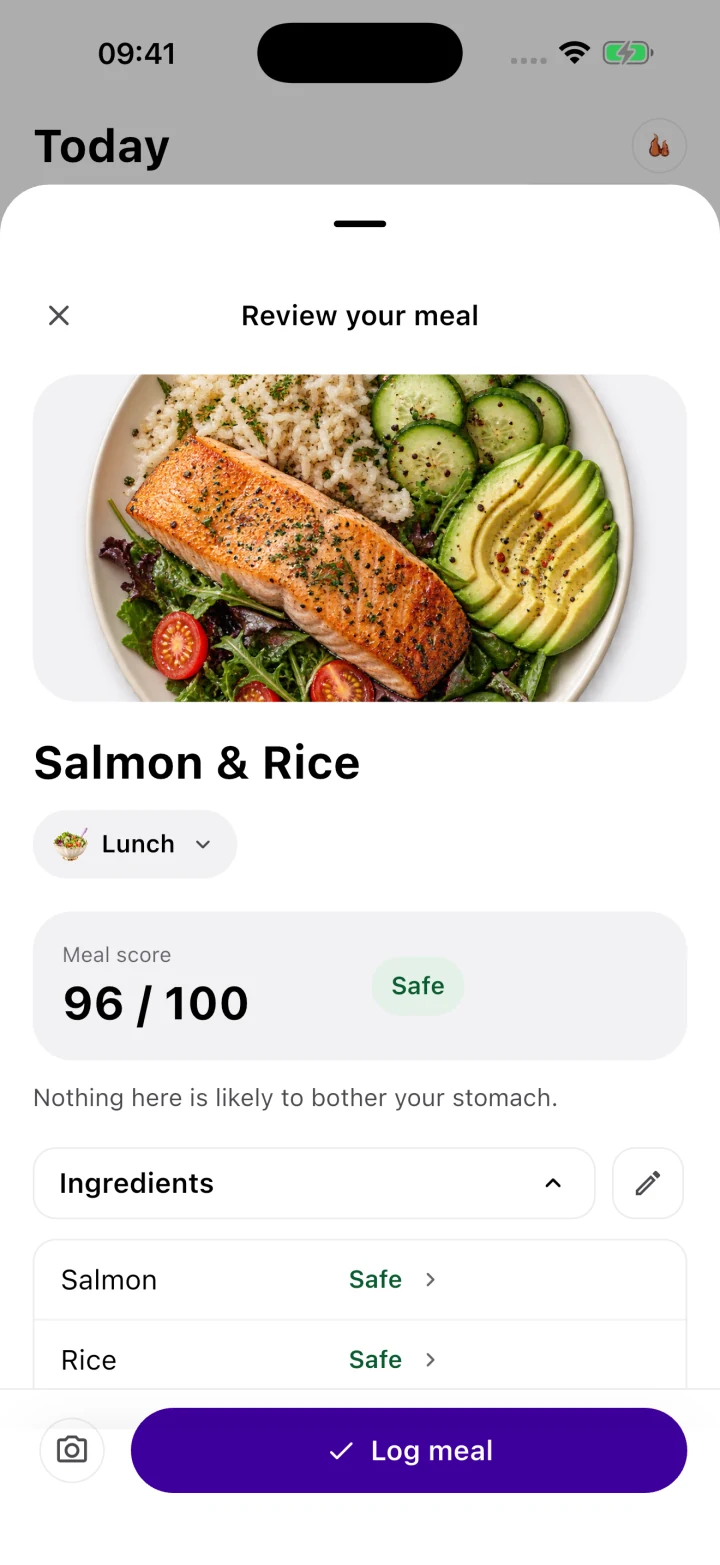
At Gutrack, we evaluate meals using the Gastric Safety Index (GSI)—a proprietary 0 to 100 clinical scoring algorithm that quantifies how a meal interacts with damaged or hypersensitive upper GI mucosa:
- Safe Zone (GSI 70–100): Low titratable acidity (pH > 5.0), minimal cholecystokinin (CCK) lipid delay, rapid gastric emptying (< 2.5 hours), and rich in soluble mucilage or clean amino acid buffers.
- Caution Zone (GSI 40–69): Moderate fat content (12–20g per meal), gentle organic acids, or dense mechanical fiber requiring thorough mastication.
- High Risk Zone (GSI 0–39): High titratable acidity (pH < 4.0), pepsin-activating compounds, high lipid density triggering LES relaxation, or direct mucosal irritants (capsaicin, chlorogenic acid, ethanol).
During a standard maintenance diet for mild gastritis, staying above a GSI of 70 is generally sufficient. However, during Weeks 2 through 6 of a PPI taper, you must strictly enforce a floor of GSI 80+ for every meal. Here are the four biochemical pillars explaining why GSI 80+ meals prevent tapering failure:
1. Eliminating Dietary Pepsin Activation (Titratable Acidity > pH 5.0)
During PPI withdrawal, pepsinogen is being converted into active pepsin inside the stomach at an accelerated rate, and some of that pepsin adheres to the mucosal cells of the gastric cardia, esophagus, and pharynx. Tissue-bound pepsin remains dormant at neutral pH, waiting for hydrogen ions to reactivate it. If you consume foods or beverages with a pH below 4.0—such as citrus juices, vinegar-based dressings, tomato sauces, carbonated sodas, or wine—you instantly reactivate tissue-bound pepsin on contact, causing immediate mucosal autedigestion before the food even reaches the stomach. GSI 80+ meals strictly maintain a luminal pH above 5.0.
2. Preventing Cholecystokinin (CCK) Lipid Transit Delay
Dietary fat is the primary nutritional driver of reflux and acid pooling during a PPI taper. When lipids exceeding 10 to 12 grams in a single meal enter the duodenum, enteroendocrine I-cells release the hormone cholecystokinin (CCK). CCK performs two actions that are disastrous during acid rebound:
- It profoundly slows gastric peristalsis and delays gastric emptying, trapping hypersecreted hydrochloric acid and pepsin inside the stomach for 4 to 5 hours instead of 90 minutes.
- It signals the lower esophageal sphincter (LES) to lower its resting pressure and increases the frequency of transient LES relaxations (TLESRs), opening the floodgates for trapped acid to splash upward.
Every GSI 80+ tapering meal caps total lipids at 8 to 10 grams, utilizing easily emulsified fats (such as small amounts of cold-pressed olive oil or avocado) while eliminating deep-fried foods, heavy dairy fats, and fatty cuts of marbled red meat.
3. Utilizing Clean Protein Buffering Without Gastrin Overstimulation
This represents one of the subtlest paradoxes in gastroenterology nutrition. In the short term, dietary protein acts as an effective chemical buffer because free amino acids and peptides bind free hydrogen ions ($H^+$) in the gastric lumen, temporarily raising stomach pH during the first 30 minutes of a meal. However, aromatic amino acids (specifically phenylalanine and tryptophan) and partially digested peptides are also the strongest luminal stimulants of antral G-cell gastrin release.
If you eat a massive 10-ounce ribeye steak during a PPI taper, the dense collagen network and high fat content delay emptying, while the flood of aromatic peptides drives your already hyperplastic G cells to pump out massive quantities of gastrin—triggering a severe acid spike 90 minutes post-meal. Conversely, GSI 80+ meals rely on 3 to 4 ounces of lean, tender, low-connective-tissue proteins (steamed white fish, poached poultry breast, egg whites, or soft silken tofu) paired with complex carbohydrates. This provides immediate $H^+$ buffering without overstimulating the G-cell gastrin cascade.
4. Deploying Beta-Glucan and Soluble Mucilage Colloidal Shields
When gastric pH drops during your first PPI-free days, your stomach lining needs reinforcement of its unstirred water and mucus-bicarbonate layer. Meals scoring above GSI 85 actively incorporate soluble viscous fibers—specifically beta-glucans from rolled oats or barley, pectin from steamed peeled apples or carrots, and natural mucilage from okra, Japanese mountain yam (nagaimo), or chia/flax hydrogels. In the presence of water, these polysaccharides form a soothing, electrostatically protective colloidal hydrogel that coats the gastric mucosa, physically slowing the back-diffusion of hydrogen ions ($H^+$) and large pepsin macromolecules toward the epithelial surface.
GSI Tapering Companion Matrix: Meal & Beverage Evaluation
To illustrate how specific food choices either shield your mucosa or trigger catastrophic acid rebound during your 6-week step-down, review the clinical comparison matrix below. Every item is scored using the Gutrack Gastric Safety Index (0–100).
| Meal / Food Item | GSI Score (0–100) | Clinical Zone | Physiological Mechanism During PPI Taper |
|---|---|---|---|
| Warm Rolled Oatmeal with Steamed Peeled Pear & Hemp Seeds (Made with almond milk) | 94 / 100 | Safe (Ideal Taper Shield) | High concentration of soluble beta-glucan forms a viscous colloidal gel that reinforces the gastric mucus-bicarbonate barrier. Alkaline almond milk (pH ~6.8) buffers basal morning acid; low lipid load (<6g) ensures rapid gastric clearance without CCK release. |
| Poached Cod (4 oz) over Jasmine Rice & Steamed Zucchini (1 tsp olive oil, sea salt) | 92 / 100 | Safe (Ideal Taper Shield) | Myofibrillar fish proteins denature rapidly, absorbing luminal $H^+$ ions within 15 minutes while requiring minimal pepsin activity. Low aromatic amino acid load prevents excessive G-cell gastrin stimulation; jasmine rice provides clean starch absorption without fermentation gas. |
| Slippery Elm Bark or Marshmallow Root Decoction (200 mL warm water, between meals) | 96 / 100 | Safe (Mucosal Buffer) | Contains high-molecular-weight bioadhesive polysaccharides (mucilage) that adhere directly to damaged or hypersensitive esophageal and gastric epithelium, creating a physical barrier against pepsin proteolysis when pH drops below 3.0 on PPI off-days. |
| Japanese Nagaimo (Mountain Yam) & Silken Tofu Miso Broth (Mild white miso, wakame) | 90 / 100 | Safe (Ideal Taper Shield) | Nagaimo contains natural mucin-like glycoproteins and digestive amylase enzymes that soothe the oxyntic mucosa and accelerate starch breakdown. Warm isotonic broth prevents gastric wall distension (a mechanical trigger for vagal acid secretion). |
| Sourdough Turkey Breast Sandwich with Avocado (3 slices turkey, 1/4 avocado, no mayo) | 76 / 100 | Safe (Maintenance Only) | Long-fermentation sourdough degrades phytic acid and fructans, and lean turkey buffers acid well. However, combined bread density and avocado lipids (~8g) slightly extend gastric residence time. Safe in Week 1, but upgrade to GSI 85+ on Week 3–5 PPI off-days. |
| Greek Yogurt Bowl with Blueberries & Walnuts (2% fat dairy yogurt, raw berries) | 56 / 100 | Caution (Avoid During Taper) | Lactic acid and raw berry malic/citric acids yield a combined meal pH of ~4.1, hovering directly at the pepsin activation threshold. Dairy casein curdles in rebound acid, and walnut lipids + insoluble skins delay emptying, causing late-morning sour regurgitation. |
| Cold Brew Coffee with Oat Milk (Low-acid dark roast, 8 oz) | 32 / 100 | High Risk (Taper Failure Trigger) | Even when cold-brewed to raise pH (~5.2), coffee contains concentrated chlorogenic acids and caffeine. Chlorogenic acids directly stimulate parietal cell $H^+/K^+$ ATPase expression, while caffeine relaxes the lower esophageal sphincter (LES), unleashing hypergastrinemic acid rebound. |
| Grilled Ribeye Steak (8 oz) with Garlic Mashed Potatoes (Butter, black pepper) | 18 / 100 | High Risk (Taper Failure Trigger) | Over 35g of saturated lipids triggers massive duodenal cholecystokinin (CCK) release, halting gastric emptying for 4+ hours and dropping LES pressure. Dense beef peptides and calcium from dairy butter hyper-stimulate enlarged G cells, causing violent nighttime acid breakthrough. |
| Spaghetti Marinara with Lean Ground Beef & Parmesan (Tomato sauce, garlic, onion) | 12 / 100 | High Risk (Taper Failure Trigger) | Cooked tomato sauce has a high titratable acidity (pH 3.8–4.2) that immediately activates tissue-bound pepsin in the esophagus. Alliums (garlic/onion) induce transient LES relaxations (TLESRs) and fructan gas distension, forcing hypersecreted acid upward. |
Daily Timing & Behavioral Protocols to Protect the LES
During Weeks 3 through 6, your stomach's nocturnal basal acid output—driven by circadian histamine release that naturally peaks between 10:00 PM and 2:00 AM—becomes your primary adversary. Even if your daytime meals score above GSI 85, poor mechanical habits in the evening will allow nocturnal acid rebound to bathe your distal esophagus while you sleep (when swallowing ceases and neutralizing salivary bicarbonate delivery drops to zero).
Implement these four clinical mechanical rules throughout the entire 42-day taper:
1. The 3.5-Hour Gastric Clearance Window Before Recumbency
Do not lie flat or recline on a sofa within 3.5 hours of finishing your evening meal. Even a GSI 85+ meal requires roughly 120 to 150 minutes to empty completely through the pyloric sphincter into the duodenum. During a PPI taper, residual food volume in the stomach stretches mechanoreceptors in the gastric wall, triggering vagovagal reflexes that provoke both transient LES relaxations and late-phase acid secretion. By ensuring the stomach is completely empty before lying down, any nocturnal histamine-driven acid surge has minimal fluid volume to ride upward into the esophagus.
2. Meal Volume Cap: Limiting Intragastric Distension Pressure
Parietal cells are activated not only by chemical signals (gastrin and histamine) but also by mechanical stretch of the stomach fundus and body via enteric nervous system reflexes and the vagus nerve. Eating two large meals a day during a PPI taper is a frequent cause of breakthrough pain. Transition to four smaller, lower-volume meals spaced every 3.5 hours (e.g., 7:30 AM, 11:00 AM, 2:30 PM, and 6:00 PM), keeping total food and liquid volume per sitting under 400 to 450 mL (roughly the size of two cupped hands). Drink the majority of your water, alkaline water (pH 8.8 to denature pharyngeal pepsin), or slippery elm tea 30 minutes before or 60 minutes after meals rather than gulping 16 ounces of fluid alongside solid food.
3. Positional Therapy: Left-Lateral Sleeping and Inclined Elevation
Anatomically, the esophagus enters the stomach on the right side (the lesser curvature), while the greater curvature of the stomach pouches out to the left.
- When you sleep on your right side, the gastroesophageal junction sits submerged beneath the pool of hypersecreted gastric acid; any transient relaxation of the LES causes immediate liquid acid reflux, and clearance time is tripled.
- When you sleep on your left side with your torso elevated on a 6- to 8-inch full-torso wedge pillow (not stacked head pillows, which bend the waist and compress the abdomen), the stomach hangs below the esophagus. Even if the LES relaxes briefly during the midnight histamine peak, gravity keeps the acid pool safely in the greater curvature away from the esophageal opening.
4. Diaphragmatic Breathing to Reinforce the Crural Diaphragm
The barrier between your stomach and esophagus is actually composed of two sphincters: the intrinsic smooth muscle of the lower esophageal sphincter (LES) and the extrinsic skeletal muscle of the crural diaphragm, which wraps around the LES like a pinch-cock. Randomized clinical trials in gastroenterology show that practicing 10 minutes of slow, deep diaphragmatic breathing (inhaling through the nose for 4 seconds by expanding the belly/lower ribs rather than the chest, holding for 2 seconds, and exhaling slowly for 6 seconds) after meals and before sleep accomplishes two physiological objectives:
- It strengthens the tone of the crural diaphragm, physically increasing gastroesophageal junction pressure and cutting postprandial reflux events by up to 50%.
- It shifts autonomic nervous system balance away from sympathetic stress and regulates vagal afferent hypersensitivity, raising the pain threshold of the esophageal mucosa during mild rebound episodes.
Why Traditional Food Diaries Fail During a PPI Taper (And How to Track with Gutrack)
When patients attempt to taper off omeprazole or pantoprazole on their own, they almost universally fall into a psychological and clinical trap: "Everything feels like a trigger."
Because PPI withdrawal involves a 72- to 96-hour physiological lag (the time required for new proton pumps to regenerate after a skipped dose) combined with fluctuating histamine waves, your symptoms today are rarely caused solely by what you ate two hours ago.
Consider a typical scenario during Week 3 of a taper:
- Monday: You take your half-dose PPI in the morning. You feel great all day, so at dinner you eat a GSI 42 meal (say, salmon with a lemon-butter sauce and roasted garlic potatoes). Because your Monday morning PPI is still blocking pumps, you experience zero pain Monday night. You mentally mark that dinner as "safe."
- Tuesday: It is an off-day bridged with famotidine. You eat a pristine GSI 92 meal of plain oatmeal for breakfast and steamed chicken and rice for lunch. However, Tuesday afternoon is when Monday’s regenerated proton pumps come online—while residual CCK delay and mild mucosal irritation from Monday night’s lemon-butter meal are still priming your gastric lining. At 3:00 PM Tuesday, your stomach burns intensely.
- The Misattribution: Looking at a basic paper food diary or a generic calorie-tracking app, you blame the plain chicken and rice—or worse, you conclude that famotidine doesn't work and your disease is incurable. You panic, abandon the taper, and go back on 40 mg of omeprazole.
Without objective meal scoring and multi-day correlation across medication half-lives, human pattern recognition breaks down completely during acid rebound.
How Gutrack Brings Clinical Precision to Your Taper
We engineered Gutrack (available on iOS at gutrack.com) specifically to solve this multi-variable tracking problem for patients managing gastritis, GERD, and medication step-downs:
- Instant 0–100 GSI Meal Scanning: Instead of guessing whether a meal is gentle enough for a PPI off-day, you simply log or scan your meal in Gutrack before you eat. The app’s clinical engine analyzes the exact combination of titratable acidity, lipid load (CCK delay), aromatic protein density, and soluble fiber buffering, returning an instant 0–100 Gastric Safety Index score. If your dinner scores a 58 on a Week 4 off-day, Gutrack shows you exactly which ingredient to swap (e.g., removing garlic/butter or adding a beta-glucan side) to push the meal above GSI 80 before it ever hits your stomach.
- Medication & Rebound Lag Correlation: Gutrack allows you to log your exact PPI step-down doses, H2-blocker bridge timing, and alginate rescue doses alongside a calibrated 1–10 Symptom Intensity & Location Tracker (distinguishing between retrosternal heartburn, epigastric gnawing, pharyngeal LPR throat clearing, and early satiety).
- 14-Day Objective Clinical PDF Exports for Your Gastroenterologist: When you visit your gastroenterologist for a 15-minute follow-up consultation, telling them "I tried to stop my PPI and my stomach burned all week" gives the physician zero actionable data—they will simply renew your PPI prescription out of caution. With Gutrack, you export a clean, one-page 14-Day Clinical Summary PDF. Your doctor can immediately see your weekly average GSI score, your exact alternate-day medication adherence, and your symptom trajectory curve. Instead of guessing, your physician can spot true physiological patterns—such as noticing that your burning only occurs between 11:00 PM and 2:00 AM on Day 2 of an off-cycle, allowing them to adjust your evening famotidine dose by 10 mg while keeping your taper on track.
Troubleshooting the Taper: Clinical Decision Rules for Setbacks
Even with a disciplined 6-week schedule and GSI 80+
Self-tracking tool, not clinical diagnosis
Gutrack provides evidence-based Gastric Safety Index estimates for daily self-management and diet optimization. It does not replace medical consultation, endoscopy, or treatment prescribed by a qualified gastroenterologist.
Frequently asked questions
What is rebound acid hypersecretion after stopping omeprazole?
Rebound Acid Hypersecretion (RAHS) is a physiological surge in gastric acid output above pre-treatment levels after stopping proton pump inhibitors. Chronic acid suppression elevates serum gastrin by 200% to 400%, causing parietal and enterochromaffin-like (ECL) cell hyperplasia that floods the stomach with acid once the medication is removed.
How long does PPI withdrawal acid rebound last?
Following abrupt cessation or dose reduction after more than 8 weeks of therapy, acid rebound typically begins 3 to 5 days after the last dose and peaks between days 10 and 14. The total duration ranges from 4 to 8 weeks while enlarged parietal and ECL cell populations gradually undergo apoptosis and return to baseline mass.
How do you step down from a PPI using famotidine (Pepcid)?
During weeks 3 to 6 of a taper, replace your PPI on alternating days with 20 mg of famotidine taken 30 minutes before breakfast or dinner. Because famotidine blocks histamine H2 receptors directly on the parietal cell, it blunts the histamine surge driven by hypergastrinemia without further stimulating gastrin production.
Can natural supplements replace PPIs during tapering?
No natural supplement inhibits the H+/K+ ATPase proton pump, so botanicals cannot directly replace a PPI molecule-for-molecule. However, sodium alginate rafts (1,000 mg post-meal) and deglycyrrhizinated licorice (DGL) or slippery elm mucilage provide essential mechanical barriers against pepsin activation when gastric pH drops below 4.0 during the transition.
Clinical Evidence & Scientific References
- Reimer C, et al. Proton-pump inhibitor therapy induces acid-related symptoms in healthy volunteers after withdrawal of therapy. Gastroenterology. 2009;137(1):80-87.
- Waldum HL, et al. Hypergastrinemia and rebound acid hypersecretion after cessation of PPIs. Aliment Pharmacol Ther. 2010;31(1):72-78.
- Targownik LE, et al. Discontinuation of Proton Pump Inhibitors: An American Gastroenterological Association Institute Clinical Practice Update. Gastroenterology. 2022;163(5):1419-1428.
This article is for educational purposes only and isn't a substitute for professional medical advice, diagnosis, or treatment. Gutrack is a self-tracking tool, not a medical device. If you're experiencing persistent or concerning symptoms, talk to a doctor.