Quick Answer for How to Sleep with Severe Acid Reflux: To sleep with severe acid reflux, position your body on your left side on a 6-to-8 inch full-torso wedge pillow or elevated bed frame, which keeps the gastroesophageal junction above the gastric acid pool. Finish a low-fat, high-GSI dinner at least 3 to 4 hours before lying down to ensure complete stomach emptying.
Waking up at 3:00 AM choking on a mouthful of bitter, burning fluid is one of the most distressing symptoms in gastroenterology. Your airway feels constricted, your throat burns from aspirated gastric juice, and your heart rate spikes from an acute autonomic panic response. Even after you sit upright and drink water, the retrosternal pain and chronic cough can persist for hours, making restorative sleep impossible.
In clinical practice, nocturnal gastroesophageal reflux disease (GERD) and laryngopharyngeal reflux (LPR) are treated as distinct physiological challenges compared to daytime heartburn. When you are awake and upright, you have three natural anatomical defenses working continuously to protect your esophageal mucosa:
- Gravitational Hydrostatics: Gravity keeps gastric contents—hydrochloric acid ($HCl$), digestive enzymes, and partially digested chime—settled in the lower portion of the stomach (the antrum) and pulls any regurgitated fluid rapidly back down out of the esophagus.
- Frequent Swallowing and Peristalsis: Awake adults swallow approximately 60 times per hour. Each swallow triggers a primary peristaltic wave that sweeps the esophageal lumen clean in less than 15 seconds.
- Salivary Bicarbonate Neutralization: Daytime saliva production averages 0.5 to 1.5 milliliters per minute. Saliva is rich in bicarbonate ions ($HCO_3^-$), which act as an endogenous chemical buffer that neutralizes residual acid adhering to the squamous epithelium of the esophagus.
The moment you fall asleep and lie flat, all three of these protective mechanisms collapse. Gravity is eliminated, putting the stomach and the esophagus on the exact same horizontal plane. Your swallowing rate drops from 60 times per hour to fewer than 5 times per hour, falling to nearly zero during deep slow-wave and REM sleep. Simultaneously, salivary gland secretion essentially ceases.
Because of this physiological shutdown, a single reflux event that would be cleared and neutralized in 30 seconds at 2:00 PM can sit pooled against your delicate esophageal lining for 20 to 45 minutes at 2:00 AM. When gastric fluid with a pH below 4.0 remains in prolonged contact with the esophagus, the proteolytic enzyme pepsin remains fully activated, digesting the intercellular tight junctions of your mucosal barrier. This is why patients with nocturnal reflux show significantly higher rates of erosive esophagitis, peptic strictures, and Barrett's esophagus on upper endoscopy (EGD) than patients who only experience daytime symptoms.
Stopping nighttime reflux requires more than taking an antacid on your nightstand. It requires engineering your sleep mechanics and evening gastric emptying kinetics so that there is neither a mechanical pathway nor an available volume of acid to breach your sphincter while you are unconscious.
The Biomechanics of Left-Side Sleeping
If you suffer from nocturnal reflux, the orientation of your torso in bed is the single most influential mechanical variable you control. The human stomach is not a symmetrical vertical tube; it is an asymmetrical, J-shaped muscular organ localized primarily in the upper left quadrant of the abdominal cavity.
The Anatomy of the Greater Curvature and the His Angle
The esophagus enters the abdomen through the diaphragmatic hiatus and connects to the stomach at the gastroesophageal junction (GEJ), guarded by the lower esophageal sphincter (LES) and the crural diaphragm. Immediately to the left of this junction, the stomach balloons outward into the fundus and curves broadly down the left side of the body, forming what anatomists call the greater curvature. The right side of the stomach forms a much shorter, tighter arc called the lesser curvature.
This asymmetry creates an acute anatomical valve known as the Angle of His—a sharp notch between the distal esophagus and the gastric fundus that acts as a flap valve when the stomach distends.
When you lie in the Left Lateral Decubitus (left-side) position:
- The expansive greater curvature and gastric fundus hang downward into the lowest gravitational point of the abdomen.
- Gastric acid, bile, and any remaining food contents pool securely inside this dependent pouch.
- The gastroesophageal junction and the lower esophageal sphincter are positioned above the air-fluid level of the stomach contents.
- If your lower esophageal sphincter undergoes a Transient Lower Esophageal Sphincter Relaxation (TLESR)—a brief, spontaneous drop in sphincter resting pressure that normally occurs to vent gas—only a small bubble of gastric air escapes into the esophagus, rather than liquid acid.
LEFT LATERAL POSITION (PROTECTIVE)
       [Esophagus]
            \
             \  <-- LES sits HIGH above the acid pool
      (Air)  [GEJ]
    +---------------+
    |   ~ ~ ~ ~ ~   | <-- Liquid Acid Pool settles down
    |  Gastric Pool |     into the Greater Curvature
    +---------------+

RIGHT LATERAL POSITION (HIGH RISK)
    +---------------+
    |  Gastric Pool |
    |   ~ ~ ~ ~ ~   |
    +--------[GEJ]--+ <-- LES is FULLY SUBMERGED in acid
             /
            /  <-- Acid pours down into esophagus during TLESR
       [Esophagus]
Why Right-Side and Supine Sleeping Trigger Reflux
When you roll onto your Right Lateral Decubitus (right-side) position, the biomechanics invert completely. The stomach is now suspended above the gastroesophageal junction. The pool of hydrochloric acid and pepsin pours across the lesser curvature and completely submerges the lower esophageal sphincter.
High-resolution esophageal manometry combined with 24-hour impedance-pH monitoring has demonstrated two hazardous outcomes in the right-side position:
- Submerged Sphincter Vulnerability: Because the LES is bathed in liquid acid rather than sitting in an air pocket, any minor drop in sphincter pressure allows liquid gastric contents to pour directly into the esophagus like water draining from an inverted bottle.
- Increased TLESR Frequency: Right-side recumbency activates vagally mediated mechanoreceptors in the gastric cardia in a pattern that actively increases the frequency of transient sphincter relaxations, while simultaneously delaying the clearance of acid once it enters the esophagus.
Sleeping flat on your back (supine) presents a different hazard. While the GEJ is not suspended entirely below the stomach as it is on the right side, the posterior placement of the esophagus means that shallow pools of gastric fluid easily reach the cardia. More importantly, if reflux does travel up the esophagus while you are flat on your back, gravity causes the fluid to pool directly in the posterior pharynx and larynx rather than draining out of the mouth, substantially increasing the risk of micro-aspiration into the trachea and lungs.
Clinical Evidence from Esophageal pH-Metry
Controlled clinical trials utilizing wireless Bravo pH capsules and catheter-based dual-channel impedance monitoring confirm these anatomical principles with hard numbers:
- Esophageal Acid Exposure Time (AET): Patients sleeping on their left side exhibit an average esophageal acid exposure time (percentage of time esophageal pH drops below 4.0) of 1.2% to 2.0%, compared to 4.5% to 6.8% when sleeping on the right side.
- Esophageal Acid Clearance Time: When a reflux event does occur at night, the median time required for the esophagus to clear the acid back into the stomach is 35 to 45 seconds on the left side, compared to 95 to 180 seconds on the right side and supine positions.
Bed Elevation Physics: Wedge Pillows vs. Stacked Pillows vs. Bed Risers
Combining left-side positioning with gravitational incline provides a dual mechanical barrier against regurgitation. However, the vast majority of patients execute bed elevation incorrectly, accidentally worsening their nocturnal symptoms.
The Biomechanical Failure of Stacking Regular Pillows
When patients are told by a physician to "elevate your head in bed," their immediate instinct is to stack two or three standard feather or memory foam bed pillows behind their head and neck. This is clinically counterproductive and frequently triggers severe nocturnal reflux.
Stacking standard pillows does not elevate your esophagus relative to your stomach. Instead, it creates a sharp hinge point at your thoracic spine and waist (the thoracolumbar junction). When you sleep on stacked pillows:
- Your head, neck, and upper shoulders are propped up at a steep 30-to-45-degree angle, while your lower ribcage, stomach, and pelvis remain completely horizontal on the mattress.
- Over the course of the night, gravity causes your torso to slide slightly down the pillows, folding your upper body forward at the abdomen.
- This abdominal folding compresses the visceral cavity and sharply increases intra-abdominal pressure (IAP).
Think of your stomach as a flexible toothpaste tube with a weak cap (the LES). Stacking pillows bends the tube in half and squeezes the middle, mechanically forcing gastric acid upward through the sphincter while your lower esophagus is still lying completely flat.
The 6-to-8 Inch Full-Torso Incline Standard
For gravitational hydrostatics to keep acid in the stomach, the incline must start at the iliac crest (your hips) and rise in a straight, unbroken hypotenuse all the way to the crown of your head. This places the entire 25-centimeter length of your esophagus on a continuous uphill slope relative to the gastric fundus.
Fluid dynamics modelling and clinical gastroenterology trials have established that the threshold needed to overcome typical nocturnal intragastric pressure is a vertical elevation of 6 to 8 inches (15 to 20 centimeters) at the head of the torso, which translates to a gentle 8-to-12-degree incline.
There are two effective ways to achieve a true anatomical incline:
1. Full-Length High-Density Foam Wedge Pillows
A medical-grade reflux wedge pillow must measure at least 24 to 32 inches in length so that the base taper begins directly beneath your lower back and hips, keeping your spine straight without bending at the abdomen.
- Height Selection: Choose a 7-inch or 8-inch rise if you have severe erosive esophagitis, a sliding hiatal hernia (>2 cm), or nighttime choking episodes. Choose a 6-inch rise if you have mild-to-moderate non-erosive reflux or sensitivity to hip pressure.
- Side-Sleeper Ergonomics: Standard flat polyurethane wedges can create painful pressure points on the bottom shoulder (acromion process) and hip (greater trochanter) when sleeping on your left side. To maintain left-side alignment without rolling onto your back in your sleep, place a thin, supportive contour pillow on top of the wedge specifically to fill the gap between your neck and the mattress, or use a contoured side-sleeper wedge equipped with a dedicated shoulder pocket.
- Preventing Downward Sliding: Placing a regular pillow underneath your knees (if lying supine) or tucked firmly between your knees and ankles (if lying on your left side) anchors your pelvis and stops your body from sliding down the wedge during REM muscle atonia.
2. Under-Frame Bed Risers or Adjustable Bed Bases
Placing solid structural blocks or heavy-duty bed risers (6 to 8 inches tall) directly beneath the two head-end legs of your bed frame—or raising an electronic adjustable bed frame without raising the knee hinge into a tight V-shape—tilts the entire mattress as a flat plane.
- Advantage: You can sleep on your normal mattress surface with your standard single head pillow, eliminating shoulder compression and the sensation of sliding down a foam ramp.
- Disadvantage: It inclines the entire bed for a sleeping partner, and cannot be used safely on certain heavy platform frames without center-leg support adaptations.
| Sleep Configuration | Anatomical Position of GEJ vs. Acid Pool | Effect on Intra-Abdominal Pressure (IAP) | Median Acid Clearance Time | Clinical Efficacy Rating |
|---|---|---|---|---|
| Left Side + 7-Inch Full-Torso Wedge / Bed Risers | GEJ sits at maximum height above the fundus acid pool; esophagus is on an uphill 10° slope. | Neutral / Decompressed | Fastest (< 30 seconds) | Gold Standard (Safe) |
| Left Side on Flat Mattress | GEJ sits above the greater curvature acid pool; esophagus remains horizontal. | Neutral | Fast (35–45 seconds) | Effective (Caution for Hiatal Hernia) |
| Supine (Back) + 7-Inch Full-Torso Wedge | GEJ sits slightly above the antrum; uphill esophageal slope prevents upward travel to pharynx. | Neutral | Moderate (45–60 seconds) | Moderate Protection |
| Stacked Regular Pillows (2–3 Head Pillows) | Stomach and lower esophagus remain flat; cervical spine and upper chest are bent forward. | Severely Elevated (Visceral compression at waist) | Delayed (90–140 seconds) | Harmful (High Risk) |
| Right Side on Flat Mattress | GEJ is completely submerged beneath the gastric acid pool; fluid drains downward into esophagus. | Neutral, but triggers frequent TLESRs | Severely Delayed (120–180+ seconds) | Worst Configuration (High Risk) |
The 3-to-4 Hour Dinner Rule: Gastric Emptying & The "Acid Pocket"
Even the most precise left-side incline will fail if you climb into bed with a distended stomach full of partially digested food and actively secreting parietal cells. Understanding why requires looking at two distinct physiological mechanisms: gastric emptying half-time ($T_{1/2}$) and the discovery of the postprandial acid pocket.
Gastric Emptying Kinetics
When you consume an evening meal, your stomach does not empty linearly like a sink drain. Solid food must first be broken down by antral peristaltic contractions and enzymatic cleavage into uniform particles smaller than 2 millimeters in diameter—a process called trituration—before the pyloric sphincter will allow the chime to pass into the duodenum.
- Low-fat carbohydrates and lean, tender proteins have a gastric emptying half-time ($T_{1/2}$) of approximately 45 to 60 minutes, achieving complete gastric clearance (>90% emptied) in 90 to 150 minutes.
- Dietary lipids (fats and oils) and dense, insoluble fibrous tissues dramatically alter this timeline. The moment even a small amount of fat enters the duodenum, enteroendocrine I-cells release the hormone cholecystokinin (CCK). CCK travels via the bloodstream back to the stomach, where it binds to receptors that inhibit antral contractions and increase the baseline tone of the pyloric sphincter. Simultaneously, high dietary fat reduces the resting basal pressure of the lower esophageal sphincter.
- A rich, high-fat evening meal (such as salmon with olive oil, steak, pasta with cream sauce, or pizza) extends total gastric emptying time to 240 to 360 minutes (4 to 6 hours).
When your stomach stays stretched and distended with food volume, mechanoreceptors in the proximal stomach wall continuously send signals via the vagus nerve to the brainstem, triggering frequent Transient Lower Esophageal Sphincter Relaxations (TLESRs). Every time your distended stomach vents, it opens the gate to your esophagus.
The Postprandial "Acid Pocket" Phenomenon
For decades, gastroenterologists assumed that swallowed food buffers stomach acid evenly throughout the entire gastric cavity. However, dual-sensor pH catheter pull-through studies revealed a dangerous anatomical phenomenon known as the postprandial acid pocket.
When you eat a meal, the food bolus mixes in the body of the stomach, raising the average intragastric pH from 1.5 up to a buffered 4.5 or 5.0. However, newly secreted hydrochloric acid from the parietal cells does not mix efficiently with the dense meal chime in the proximal stomach. Instead, a distinct layer of unbuffered, highly concentrated acid (pH 1.2 to 2.2) floats directly on top of the food bolus, pooling right beneath the lower esophageal sphincter at the gastroesophageal junction.
This acid pocket forms within 15 to 20 minutes of finishing a meal and persists for up to 120 to 180 minutes, waiting until the main food bolus empties through the pylorus.
If you eat dinner at 8:00 PM and lie down in bed at 9:30 PM, your stomach is still 60% full of food, pushing a dense, unbuffered pool of pH 1.6 hydrochloric acid and active pepsin directly up against your sphincter. The moment you transition from standing to lying down, that floating acid pocket shifts horizontally across the gastroesophageal junction and washes into your esophagus.
By enforcing a strict 3-to-4 hour window between your last bite of solid food and recumbency, you allow three critical things to occur before your head hits the wedge pillow:
- Complete trituration and trans-pyloric clearance of the solid food bolus (>95% empty).
- Decompression of gastric fundic stretch receptors, cutting nocturnal TLESR frequency by more than half.
- Dispersion and downward clearance of the postprandial acid pocket, leaving only minimal basal gastric secretions (<30 mL) that easily stay contained in the greater curvature on your left side.
Evening Hydration Cutoffs
Liquid volume also stretches the stomach and raises intragastric hydrostatic pressure. Drinking two large glasses of water, herbal tea, or milk right before turning off the lights fills the gastric fundus and floats residual acid upward toward the LES.
- Clinical Rule: Finish your primary fluid intake alongside or 60 minutes after dinner. In the final 90 minutes before bed, limit liquid intake to small sips of plain or alkaline water (no more than 2 to 3 ounces total) strictly as needed to take evening medications or moisten your throat.
The GSI Evening Dinner Guide: Rapid 90-Minute Stomach Clearance
Because the 3-to-4 hour dinner rule relies entirely on your stomach actually being empty at bedtime, what you eat at 6:30 PM is just as important as when you eat it. If you eat a heavy, lipid-dense meal at 6:30 PM, your CCK-delayed stomach can still be 40% full at 10:30 PM, defeating your 4-hour waiting window.
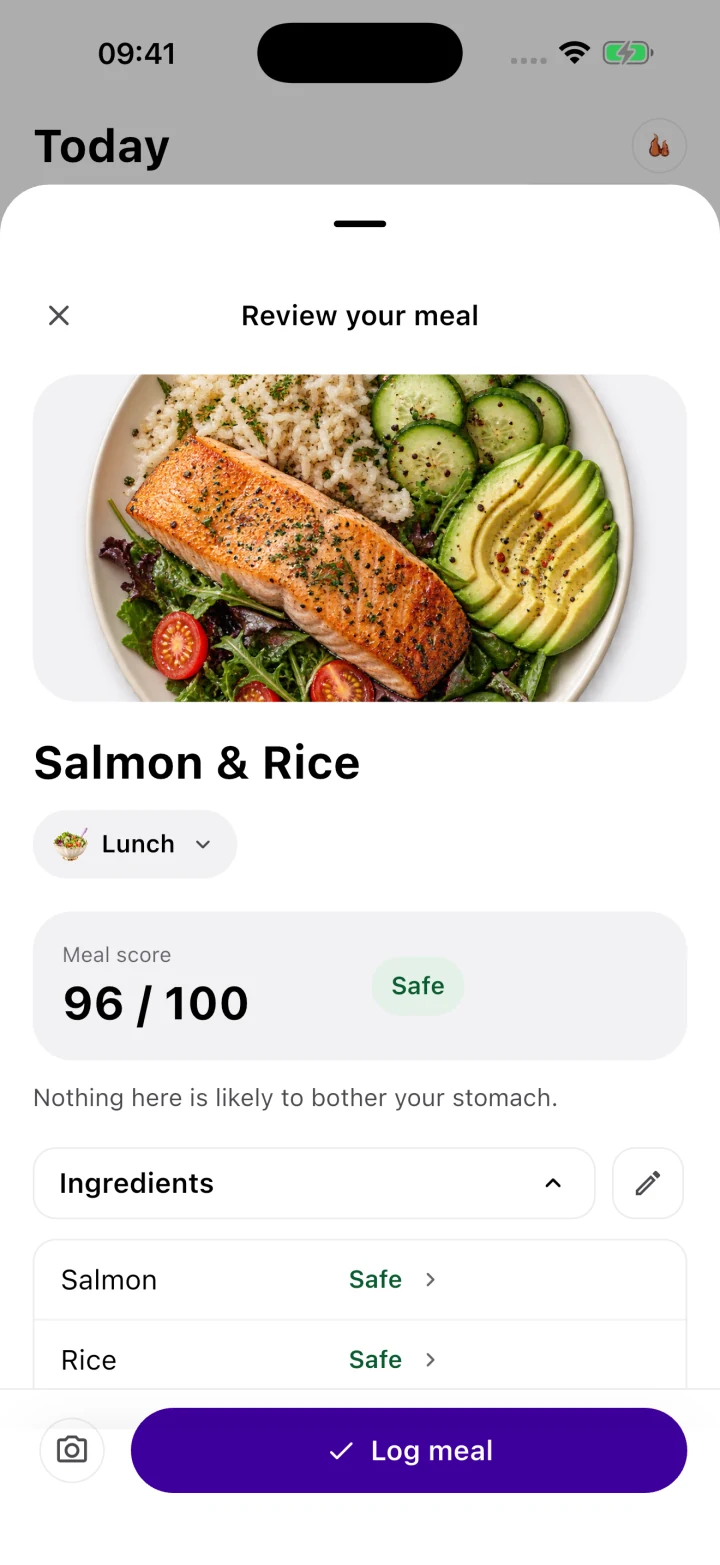
At Gutrack, we evaluate meals using the Gastric Safety Index (GSI)—a proprietary 0–100 clinical scoring algorithm that models how specific ingredients, macronutrient ratios, cooking methods, and pH profiles interact with gastric mucosa and emptying dynamics:
- Safe Zone (GSI 70–100): Low lipid load (<8–10g fat per meal), neutral titratable acidity (pH > 5.0), free of direct LES relaxants, rich in mucosal-protective compounds like soluble beta-glucans or mucilage, and engineered for rapid 90-to-120-minute gastric clearance.
- Caution Zone (GSI 40–69): Moderate fat or insoluble fiber density that extends gastric emptying to 180–210 minutes; safe for midday meals during active recovery, but carries moderate risk if consumed late in the evening.
- High Risk Zone (GSI 0–39): Triggers acute CCK lipid stasis (>240-minute clearance), directly drops LES resting tone (alliums, carminatives, methylxanthines, ethanol), or introduces exogenous acid (pH < 4.0) that reactivates tissue-bound esophageal pepsin on contact.
When patients try to track nighttime reflux using a standard paper food diary or a basic calorie tracker, they almost always hit a wall of frustration. Because dinner ingredients interact cumulatively—and because delayed gastric emptying means a 7:00 PM meal can cause a 2:00 AM choking episode—everything begins to feel like a trigger. Without an objective motility and acidity score for the meal as a whole, patients end up eliminating safe foods unnecessarily while overlooking hidden lipid or pH triggers in their evening routine.
Scanning your evening meal in the Gutrack iOS app provides an instant 0–100 GSI calculation before you eat, breaking down the exact fat-driven transit delay and acidity risk so you know with mathematical certainty whether your stomach will be empty by bedtime.
Clinical GSI Comparison: Evening Dinners & Bedtime Snacks
| Evening Meal / Snack | GSI Score (0–100) | GSI Zone | Estimated Gastric Clearance | Physiological & Biochemical Mechanism |
|---|---|---|---|---|
| Poached White Cod (150g), Steamed White Jasmine Rice & Peeled Zucchini | 92 / 100 | Safe | 75–90 mins | Ultra-low lipid content (<2.5g total fat) avoids CCK release; low-residue starch undergoes rapid enzymatic hydrolysis and fast trans-pyloric clearance without fundic distension. |
| Warm Rolled Oat Porridge with Mashed Ripe Banana & Almond Milk | 88 / 100 | Safe | 90–105 mins | Soluble beta-glucan fiber forms a soothing colloidal hydrogel over gastric mucosa; pH > 6.0 buffers basal $HCl$ without stimulating excessive gastrin release. |
| Baked Skinless Turkey Breast Tenderloin with Mashed Butternut Squash | 84 / 100 | Safe | 90–120 mins | Lean amino acid profile stimulates mild, transient gastric buffering before rapid trituration; rich in carotenoids that support mucosal prostaglandin synthesis. |
| Tofu & Bok Choy Noodle Soup in Ginger-Infused Bone Broth (Low Fat) | 81 / 100 | Safe | 80–100 mins | Liquid/soft-solid matrix bypasses prolonged antral grinding; gingerols act as mild prokinetics on gastric antral contractility, accelerating clearance before sleep. |
| Pan-Seared Atlantic Salmon (180g) with Quinoa & Roasted Broccoli | 56 / 100 | Caution | 180–210 mins | Healthy omega-3 lipids (~22g fat) plus insoluble cruciferous fiber trigger duodenal CCK and colonic fermentation gas, keeping the acid pocket elevated for 3+ hours. Better suited for lunch. |
| Whole-Wheat Pasta with Olive Oil, Garlic & Sautéed Spinach | 44 / 100 | Caution | 200–240 mins | Fructans and organosulfur compounds in garlic directly relax LES basal tone and generate intragastric gas pressure, triggering nocturnal TLESRs. |
| Pepperoni Pizza or Tomato Marinara Pasta with Melted Mozzarella | 14 / 100 | High Risk | 300–360+ mins | High titratable acidity of tomato sauce (pH 3.8–4.2) activates tissue-bound pepsin immediately; heavy saturated lipid load arrests pyloric emptying for up to 6 hours. |
| Grass-Fed Ribeye Steak with Buttered Potatoes & 1 Glass of Red Wine | 8 / 100 | High Risk | 330–390+ mins | Dense myofibrillar protein + heavy saturated fat creates prolonged antral stasis; ethanol directly inhibits LES muscular tone and impairs primary esophageal peristalsis during sleep. |
| Late-Night Dark Chocolate Square (70% Cacao) or Peppermint Tea | 18 / 100 | High Risk | N/A (Direct Sphincter Trigger) | Theobromine and caffeine in cacao, along with menthol in peppermint, act as potent smooth muscle relaxants on the LES, lowering sphincter resting pressure within 15 minutes of ingestion. |
The Biochemical Trap of "Healthy" Bedtime Remedies
Many patients with nocturnal GERD inadvertently sabotage their sleep with well-intentioned nighttime rituals that look healthy on the surface but fail biochemically:
- Peppermint Tea Before Bed: While menthol acts as an antispasmodic smooth muscle relaxant that can soothe lower intestinal cramping in IBS, it has the exact same relaxing effect on the smooth muscle of your lower esophageal sphincter. Drinking peppermint or spearmint tea at 9:30 PM chemically opens the valve between your stomach and esophagus right before you lie down. Clinical Swap: Steep pure German Chamomile (Matricaria recutita) or Slippery Elm (Ulmus rubra) bark powder in 4 ounces of warm water 90 minutes before sleep. Slippery elm contains complex polysaccharides that swell into a protective demulcent mucilage, physically coating the distal esophagus against pepsin injury without altering LES resting pressure.
- A Glass of Warm Dairy Milk at Bedtime: Whole or 2% milk initially buffers stomach acid upon swallowing because its pH is near neutral (~6.7). However, milk contains a dense combination of dairy fat, whey, and casein proteins alongside high concentrations of ionized calcium. Once milk reaches the gastric antrum, calcium and digested amino peptides strongly stimulate G-cells to release the hormone gastrin, which in turn drives parietal cells to pump out a massive wave of rebound hydrochloric acid 60 to 90 minutes later—right after you have fallen into deep sleep.
- Late-Night Fruit (Apples, Berries, or Citrus): Consuming high-acid fruit (pH 3.2 to 4.2) late in the evening introduces exogenous hydrogen ions into the esophagus, reactivating dormant pepsin molecules that are still bound to your throat and esophageal mucosa from earlier reflux events. Furthermore, high-fructose fruits eaten on top of a slower-moving dinner ferment rapidly, producing hydrogen and methane gas that forces the LES open via belching reflexes.
Pharmacological & Barrier Adjuncts for Severe Nocturnal Reflux
When lifestyle mechanics—left-side positioning, a 7-inch full-torso incline, and a 3.5-hour post-dinner fasting window with a GSI > 75 meal—are combined with targeted medical management, even severe nocturnal erosive reflux can be brought under complete control. Discuss the following timing and barrier mechanics with your treating gastroenterologist:
1. Sodium Alginate Raft Therapy at Bedtime
Unlike standard calcium carbonate antacids (which simply neutralize existing acid in the stomach for 20 to 30 minutes and have zero effect on mechanical regurgitation), sodium alginate formulations create a physical mechanical barrier over the postprandial acid pocket.
Derived from brown seaweed (Laminaria hyperborea), sodium alginate reacts instantly upon contact with gastric hydrochloric acid to precipitate into a viscous, low-density alginic acid gel. The bicarbonate present in the formulation gets trapped inside this gel matrix as tiny carbon dioxide micro-bubbles, turning the gel into a buoyant neutral pH foam "raft" that floats directly on top of the stomach contents right at the gastroesophageal junction.
- Mechanism: If a nocturnal TLESR occurs while you are sleeping, the floating alginate raft is pushed up against the lower esophageal sphincter ahead of the acidic gastric juice, acting as a physical cork that blocks acid and pepsin from entering the esophagus for up to 4 hours.
- Optimal Timing: Must be taken after your evening meal and after you have finished all evening liquids (typically 30 minutes before getting into bed). If you eat or drink large volumes of water after taking an alginate, you physically punch a hole through the floating raft and sink it.
2. Proton Pump Inhibitor (PPI) and H2-Blocker Circadian Timing
A remarkably high percentage of patients diagnosed with "refractory nocturnal GERD" are actually taking their prescribed acid-suppressing medication at the wrong time of day.
- Why Bedtime PPIs Fail: Proton Pump Inhibitors (such as omeprazole, pantoprazole, or esomeprazole) are prodrugs that only bind to and deactivate actively secreting $H^+/K^+$ ATPase proton pumps in the parietal cell membrane. Proton pumps are only activated in large numbers when stimulated by a meal. Taking a PPI right before you go to sleep—when your stomach is empty and your parietal cells are dormant—renders the drug largely ineffective. PPIs must be taken 30 to 60 minutes before a meal (either before breakfast, or split before breakfast and before your evening dinner) so that peak plasma concentrations of the drug coincide with meal-stimulated pump activation.
- Nocturnal Acid Breakthrough (NAB) and Histamine H2-Receptors: Even on twice-daily PPI therapy, up to 70% of GERD patients experience Nocturnal Acid Breakthrough—a physiologic surge of gastric acid secretion occurring between 12:00 AM and 4:00 AM driven not by meal gastrin, but by circadian releases of histamine from enterochromaffin-like (ECL) cells. Because histamine H2-receptor antagonists (such as famotidine) block the histamine receptor directly rather than requiring meal activation, gastroenterologists frequently utilize targeted bedtime H2-blockers or slow-release alginate barriers to cover this specific midnight-to-4-AM window, while carefully managing potential tachyphylaxis (tolerance buildup over consecutive weeks).
3. Alkaline Water (pH 8.8+) for Laryngopharyngeal Pepsin Deactivation
If your primary nighttime symptom is waking up with a chronic tickling cough, vocal hoarseness, globus sensation (the feeling of a lump in your throat), or choking spasms, the culprit is almost always pepsin adhered to your laryngeal mucosa.
Pepsin remains maximally active at pH 1.5 to 2.5, becomes dormant (inactive but stable) between pH 4.5 and 6.8, and is permanently and irreversibly denatured (destroyed) at pH 8.0 and above. Drinking normal tap water (pH 6.8 to 7.2) does not destroy tissue-bound pepsin in your throat; the enzyme simply waits in a dormant state until you eat or reflux something mildly acidic, at which point it wakes back up and resumes digesting your vocal cord and pharyngeal tissues.
Taking two small sips (1 to 2 ounces) of naturally alkaline water with a pH of 8.8 or higher right before lying down washes the posterior pharynx and upper esophagus, permanently deactivating any pepsin molecules adhering to the mucosa without adding excess fluid volume to your stomach.
Connecting Apple Health Sleep Telemetry to Evening Meals in Gutrack
One of the most insidious aspects of nocturnal acid reflux is "silent nocturnal reflux." During deep sleep, micro-reflux events frequently occur without fully waking you up to conscious awareness. You may not remember choking at 3:00 AM, yet you wake up at 7:00 AM with unexplained fatigue, a coated tongue, mild sore throat, chest tightness, or morning brain fog.
Even when you do not consciously wake up, your autonomic nervous system registers every nocturnal esophageal acid assault. When acid with a pH below 4.0 breaches the lower esophagus during sleep, it stimulates vagal nociceptors and triggers the esophagocardiac reflex, causing immediate, measurable disruptions in your biometric telemetry:
- Nocturnal Resting Heart Rate (RHR) Spikes: Brief sympathetic nervous system micro-arousals cause sudden spikes of 10 to 25 beats per minute above your sleeping baseline.
- Suppressed Heart Rate Variability (HRV): Prolonged vagal irritation and micro-aspiration stress suppress nocturnal vagal tone, dragging your overnight HRV down by 15% to 35% following a high-risk dinner.
- Sleep Stage Fragmentation: Acid exposure immediately pulls the brain out of restorative Deep (Slow-Wave) and REM sleep into light Stage 1 sleep or brief "Awake" micro-interruptions registered by wrist accelerometry and optical heart rate sensors.
- Respiratory Rate Fluctuations: Micro-aspiration of aerosolized pepsin into the upper airway triggers subtle bronchoconstriction and elevated nocturnal breathing rates.
HIGH-RISK DINNER (GSI 24 eaten at 8:30 PM, Bed at 10:00 PM)
  -> 12:30 AM: Acid Pocket breaches LES in supine/right position
  -> 01:15 AM: Esophageal pH drops < 4.0 (Silent Reflux Event)
  -> 01:16 AM: Apple Watch detects RHR spike (58 -> 81 bpm) & REM exit
  -> 07:00 AM: Patient wakes exhausted with sore throat & low HRV

SAFE DINNER + PROTOCOL (GSI 88 eaten at 6:30 PM, Bed at 10:00 PM on Left-Side 7" Wedge)
  -> 08
Self-tracking tool, not clinical diagnosis
Gutrack provides evidence-based Gastric Safety Index estimates for daily self-management and diet optimization. It does not replace medical consultation, endoscopy, or treatment prescribed by a qualified gastroenterologist.
Frequently asked questions
Why is sleeping on the left side better for acid reflux?
The stomach curves toward the left side of the abdominal cavity. Sleeping on your left side positions the gastroesophageal junction above the pool of gastric fluid, requiring acid to flow uphill against gravity to enter the esophagus, which reduces nocturnal acid exposure time by up to 71% compared to right-side sleeping.
Does a wedge pillow really stop nighttime GERD?
Yes, provided it elevates the entire torso from the hips up by 6 to 8 inches (15 to 20 cm). Clinical pH-metry studies demonstrate that a continuous 6-inch torso incline significantly decreases both the frequency of reflux episodes and the time required for the esophagus to clear regurgitated acid.
How many hours before bed should you stop eating for acid reflux?
You must stop eating solid food at least 3 to 4 hours before lying down. A standard mixed evening meal takes 180 to 240 minutes to empty from the stomach; lying flat before clearance is complete pushes the highly acidic postprandial 'acid pocket' directly against the lower esophageal sphincter.
Can nighttime acid reflux cause waking up coughing or choking?
Yes. When gastric contents containing hydrochloric acid and activated pepsin travel past the upper esophageal sphincter during sleep, they contact the larynx and vocal cords. This triggers an immediate protective laryngospasm and violent cough reflex, causing you to wake up gasping for air with a burning throat.
If your nighttime reflux coincides with bloating, the low-FODMAP vs low-acid diet comparison explains which elimination approach targets which symptom pathway.
Clinical Evidence & Scientific References
- Schuitenmaker JM, et al. Associations between sleep position and nocturnal gastroesophageal reflux: a study using concurrent ambulatory manometry-pH monitoring. Am J Gastroenterol. 2022;117(2):346-351.
- Person E, et al. A Novel Sleep Positioning Device Reduces Gastroesophageal Reflux: A Randomized Controlled Trial. J Clin Gastroenterol. 2015;49(8):655-659.
- Kaltenbach T, et al. Are lifestyle measures effective in patients with gastroesophageal reflux disease? An evidence-based approach. Arch Intern Med. 2006;166(9):965-971.
This article is for educational purposes only and isn't a substitute for professional medical advice, diagnosis, or treatment. Gutrack is a self-tracking tool, not a medical device. If you're experiencing persistent or concerning symptoms, talk to a doctor.